Starting a clothing brand in 2027 could cost as little as $500 with print on demand or more than $50,000 for a custom clothing collection. The biggest factor is how you produce your products. Selling printed T-shirts through an outside supplier costs far less upfront than developing original garments, purchasing inventory and managing production yourself.
For a small online clothing business, a starting budget of $2,000 to $5,000 provides room for product samples, a website, basic marketing and unexpected expenses. A brand launching with manufactured inventory will usually need more capital.
The figures below are planning estimates for 2027, based on business expenses and supplier pricing available in 2026. Actual costs will depend on your location, clothing category and production arrangements.
How Much Money Do You Need to Start a Clothing Brand in 2027?
The amount depends on the business model. A print-on-demand store produces clothing after customers order it, while a private label brand generally purchases finished products in advance. Custom manufacturing involves developing garments according to your own specifications.
| Clothing Business Model | Estimated Startup Budget for 2027 | Typical Starting Point |
| Print on demand | $500 to $2,000 | Printed T-shirts, hoodies and accessories |
| Small private label brand | $3,000 to $10,000 | Existing garments customized with branding |
| Custom clothing collection | $10,000 to $30,000 | Original patterns, fabrics and manufactured garments |
| Larger independent clothing brand | $30,000 to $50,000+ | Multiple designs, larger inventory and professional marketing |
These are estimated launch budgets, not guaranteed supplier prices or official industry averages. They assume an online business without a physical retail store.
The Xero guide to starting a clothing line also places startup expenses between $2,000 and $50,000, depending on production methods and business scale.
1. Clothing Design and Product Development Costs
@brandandbuildfashion How much does it actually cost to start a fashion brand? 👀 One of the biggest mistakes new fashion founders make is not understanding the costs involved before launching. Let’s talk about what you really need to budget for so you can plan properly and avoid expensive mistakes. Save this if you’re planning to launch your fashion brand in 2027! 💕 #clothingbrandtips #fashionbusiness #startafashionbrand #fashionentrepreneur #fashionmentor ♬ original sound – Brand and Build Fashion
Before manufacturing anything, you need designs that can be turned into finished products.
If you already know how to create digital artwork or clothing patterns, you can complete some of the design work yourself. Hiring a professional designer increases expenses, particularly when developing original garments.
For a small brand, a reasonable initial planning budget is $100 to $1,000 for simple graphics, design assistance and revisions. Custom patterns, technical drawings and multiple prototypes can cost considerably more.
Product samples should also be included in your budget. A garment that looks attractive in a digital mockup may have problems with sizing, stitching or fabric quality.
Order and inspect samples before approving a larger production run. Fixing a design issue at this stage is less expensive than discovering it after hundreds of garments have been manufactured.
2. Manufacturing and Printing Expenses
Production will often account for the largest part of your startup budget when you purchase inventory upfront.
Consider a brand ordering 200 T-shirts at a hypothetical manufacturing cost of $9 each. The initial product expense would be $1,800 before shipping, packaging and other charges.
If the same brand orders 200 hoodies at $24 each, manufacturing would cost another $4,800.
Producing a small collection can therefore consume thousands of dollars before a single item is sold.
Printing Clothing Yourself
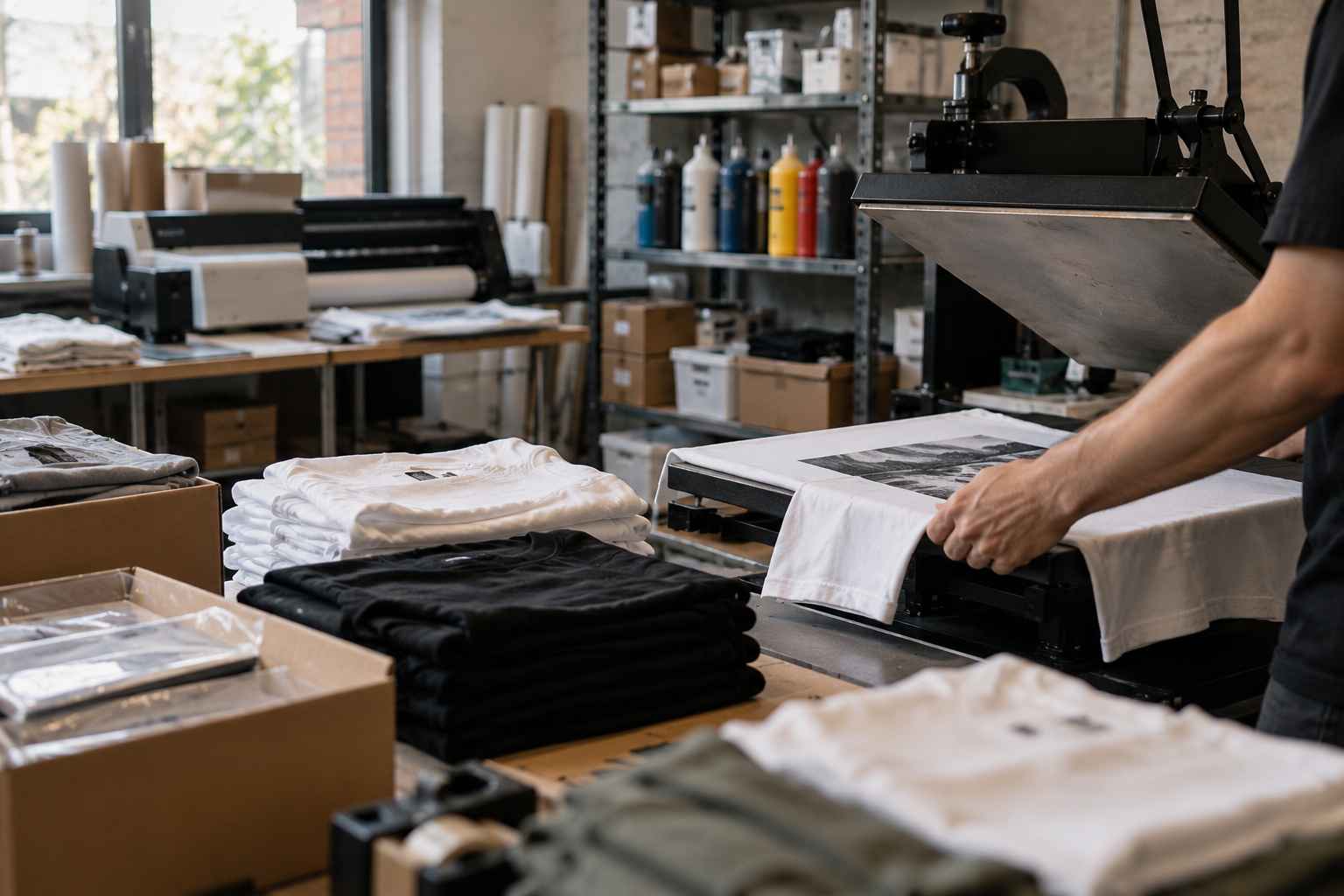
Some businesses bring printing in-house to control production schedules and handle personalized orders.
For example, a dtf printer produces designs on transfer film that can be applied to suitable clothing using a heat press. Equipment costs depend on machine size and production capacity, while ongoing expenses include ink, film, adhesive powder, maintenance and electricity.
Purchasing professional printing equipment should be a separate budget decision. If you expect only a small number of orders initially, outsourcing transfers or garment printing may cost less than purchasing and maintaining a machine.
Using Print on Demand
Print-on-demand services manufacture each garment after a customer purchases it, eliminating the need to order stock in advance.
According to Printful pricing information, its free plan has no setup fee or minimum order quantity. Sellers pay for production and fulfillment when orders are placed.
However, per-item costs can be higher than bulk manufacturing. Shipping, additional print areas and other customization options may also increase the final price.
3. Website and Online Store Costs
Most small clothing brands can begin selling through an online store without renting commercial premises.
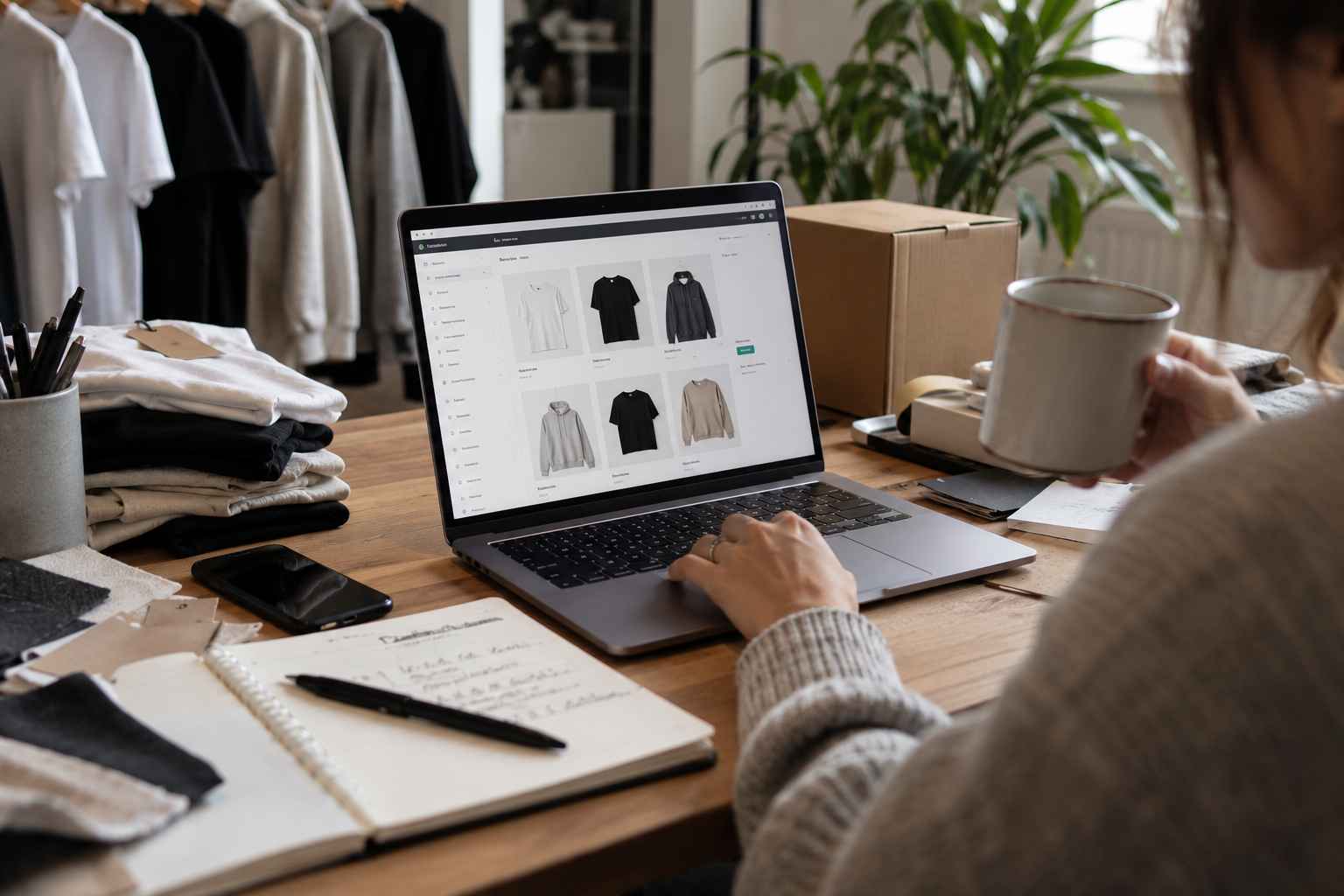
An ecommerce website needs product pages, payment processing, shipping information and inventory management.
For example, Shopify currently lists its Basic plan at $39 per month when billed monthly or $29 per month when billed annually, using US pricing. These are 2026 prices and may change before 2027.
Additional expenses may include a custom domain, premium website design, paid applications and payment processing charges.
For a small startup, budgeting $300 to $1,000 for the initial website setup and early operating period is a reasonable planning assumption if you build the store yourself.
ThriveMyWay also compares ecommerce platforms for online businesses, including options for stores with different budgets and product requirements.
4. Business Registration and Trademark Costs
Starting a clothing company can involve registration fees, permits, tax obligations and other administrative expenses.
Costs vary according to location and legal structure. A sole proprietor operating a small online store may have different requirements than a company planning to hire employees or sell internationally.
For entrepreneurs in the United States, the United States Patent and Trademark Office currently charges a base trademark application fee of $350 per class of goods or services, with possible additional charges.
Trademark registration is not the same as registering a business. You should check both requirements before launching under a new name.
Set aside several hundred dollars for initial administrative expenses, then obtain actual local quotes for legal assistance, registrations and insurance.
5. Branding, Packaging and Product Photography
Customers judge clothing through product photographs, descriptions and the appearance of the brand.
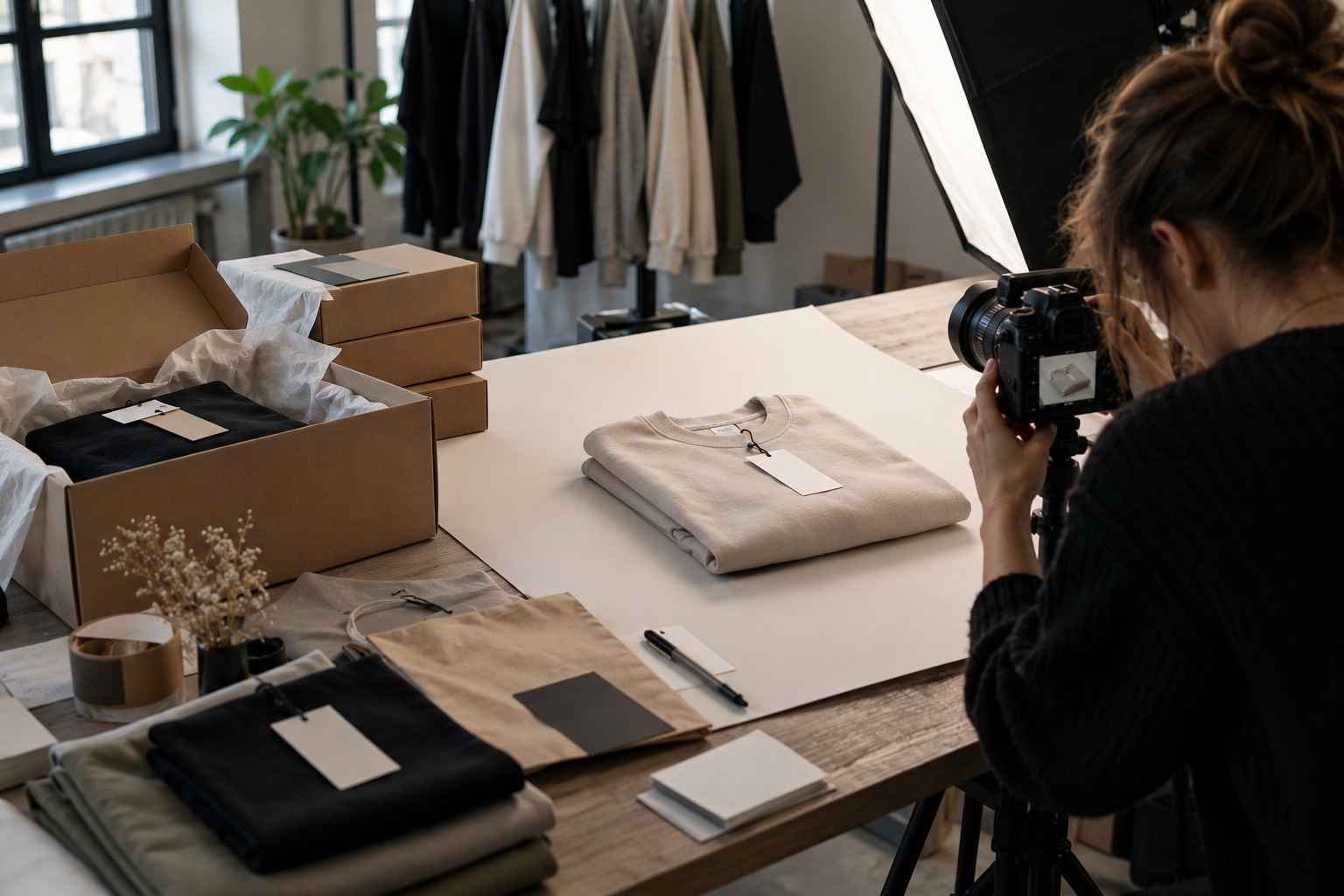
Professional photography can become expensive, but a small business may be able to photograph initial samples using a smartphone, natural lighting and a clean background.
Packaging expenses include shipping mailers, labels, protective materials and any branded inserts.
For an initial collection, consider a planning budget of $100 to $500 for basic packaging and photography supplies. Professionally produced campaigns and custom packaging can increase the expense.
Spend enough to present your actual products clearly. Customers should be able to see fabric texture, garment fit and important details before ordering.
6. Marketing Costs for a New Clothing Brand
Even a well-designed clothing collection can struggle if potential customers never discover it.
Marketing may include social media content, photography, influencer partnerships, email campaigns and paid advertising.
A startup with a small budget can begin with original social media content and a modest advertising test.
For example, allocating $300 to $1,000 for initial marketing provides room to test different messages and creative materials without committing the entire launch budget to advertising.
The actual return depends on product appeal, pricing, audience targeting and the quality of the online store.
Before increasing advertising spending, track how many visitors purchase products and how much each new customer costs to acquire.
7. Shipping, Inventory Storage and Returns
Shipping is one of the expenses new clothing brands frequently underestimate.
Costs depend on parcel dimensions, package weight, destination and delivery speed. International sales may also involve customs charges and additional paperwork.
If you hold inventory, you need somewhere to store it. Small initial collections may fit in a dedicated room, but larger quantities can require commercial storage or fulfillment services.
Returns are another expense. Clothing customers may order the wrong size or return items that do not fit as expected.
Accurate size charts and clear product photographs can help customers choose suitable garments, although returns cannot be eliminated entirely.
@mifindsandflips Replying to @Annie Aponte this is how I store and manage my inventory. All bags and boxes are purchased from Amazon #reseller #behindthescenes #inventor #ebay #poshmark ♬ original sound – mifindsandflips
Example Budget for Starting a Clothing Brand With $5,000
A $5,000 budget can support a small online launch with limited inventory, provided the collection remains focused.
The following example assumes an owner-operated business, outsourced manufacturing and no commercial rent.
| Expense | Estimated Budget |
| Product design and samples | $500 |
| Initial inventory | $2,200 |
| Online store setup | $400 |
| Branding, photographs and packaging | $400 |
| Registration and administration | $300 |
| Launch marketing | $700 |
| Cash reserve | $500 |
| Total | $5,000 |
Actual costs may differ significantly. A business requiring custom patterns, extensive sampling or specialist legal services could exceed this budget before the launch.
Calculate Profit Before Selling Your First Collection
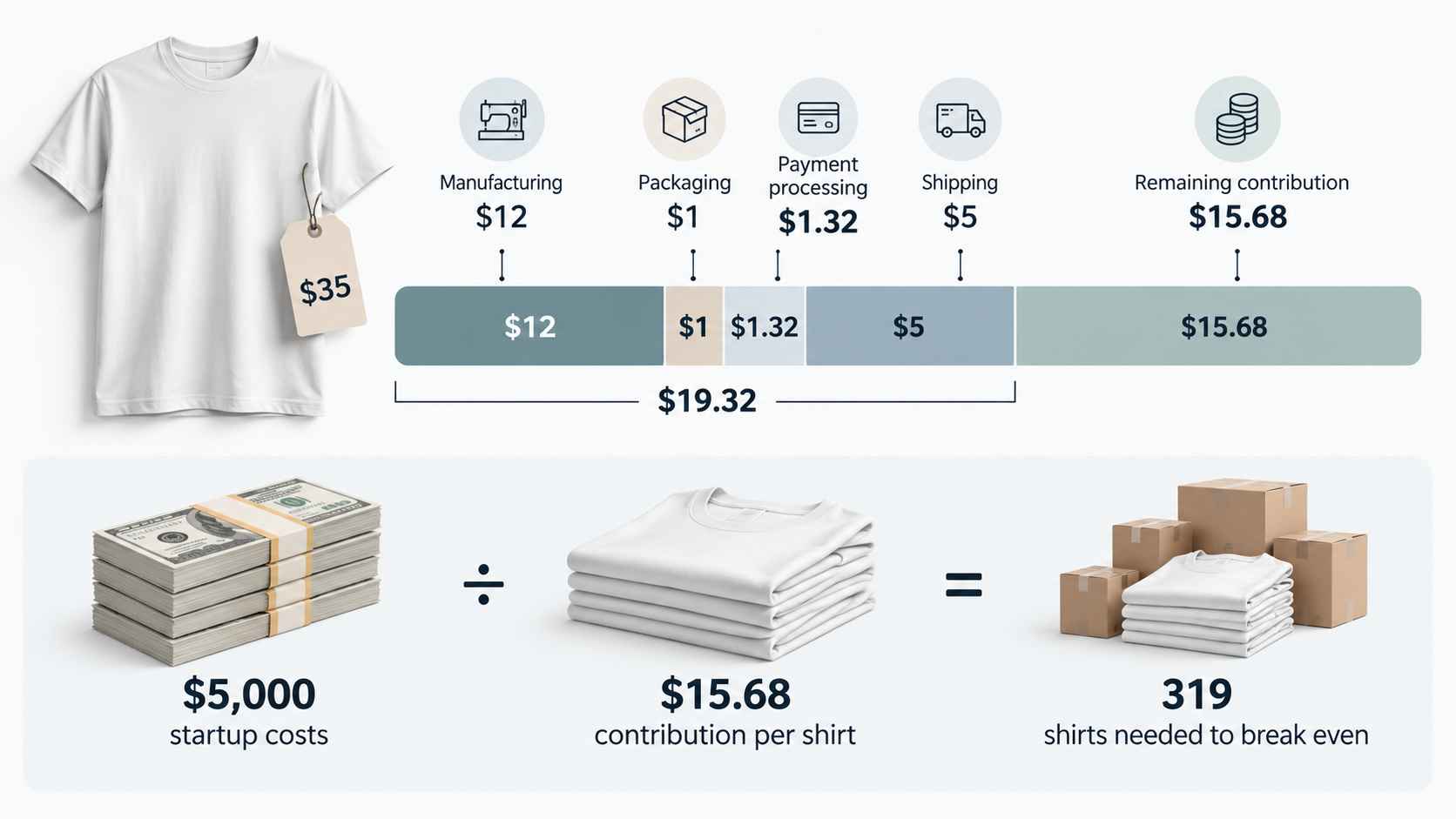
Startup costs tell you how much money you need to open. Product margins determine how much remains after each sale.
- Retail selling price of $35
- Manufacturing cost of $12
- Packaging cost of $1
- Payment processing cost of $1.32
- Seller-paid shipping cost of $5
The total listed variable cost is $19.32, leaving $15.68 per shirt before marketing, fixed business expenses, returns and taxes.
If your initial startup expenses total $5,000, you would need to sell 319 shirts at that contribution level to cover those expenses, assuming no other costs or changes.
Calculate your margins before choosing retail prices. Selling more products does not guarantee profitability when expenses consume most of the revenue.
The Bottom Line
For a first clothing business, $500 to $2,000 may be enough to test a print-on-demand concept. A small brand purchasing inventory should consider a larger budget, often between $3,000 and $10,000.
Custom clothing production requires more capital because of pattern development, sampling and manufacturing commitments.
Before spending money, decide which products you want to sell, request supplier quotations and calculate expected profit per item. Keep some of your budget available after launch so that an unexpected expense does not interrupt production or customer deliveries.
All 2027 startup figures are planning estimates based on information available in October 2026. Supplier prices, platform subscriptions and government fees should be checked again before making financial commitments.