Energy performance now sits much closer to the money side of property than many owners expect. Buyers look at running costs. Tenants compare comfort and bills. Lenders, landlords, investors, and valuers increasingly factor in future upgrade costs, regulation, and resale risk.
A low energy rating may not destroy a valuation on its own, but it can weaken buyer confidence, narrow the pool of interested people, and give negotiators a clear reason to push harder on price. A strong rating can do the opposite, especially when high energy bills are already on people’s minds.
What Energy Performance Means In Property Valuation
Energy performance measures how efficiently a building uses energy for heating, hot water, lighting, ventilation, cooling, and other core systems. In many markets, the most familiar shorthand is the Energy Performance Certificate, or EPC.
For new-build buyers, companies such as Elythera Investments show how energy efficiency can be treated as part of the property’s basic design rather than as a later upgrade.
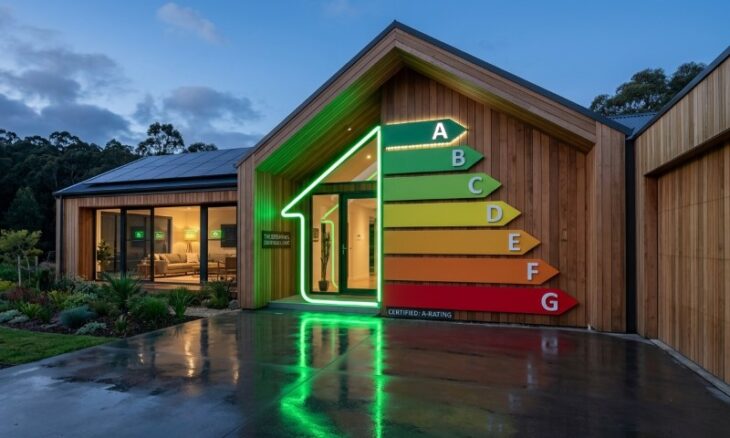
In England and Wales, an EPC rates a property from A to G, with A being the most efficient and G being the weakest.
An EPC also includes typical energy cost information and recommended improvements, and it is usually needed before a property is sold, rented, or built. GOV.UK states that an EPC is valid for 10 years.
For valuation purposes, energy performance matters because it affects several price-sensitive factors at once:
| Valuation factor | How energy performance affects it |
| Running costs | Better insulation and efficient systems can lower monthly bills |
| Buyer demand | Efficient homes may stand out in a market where bills matter |
| Rental appeal | Tenants often care about comfort and predictable costs |
| Legal compliance | Poor ratings can limit rental use in regulated markets |
| Upgrade risk | Buyers may price in future retrofit work |
| Financing and investment | Some lenders and funds increasingly screen for climate and energy risk |
A valuer rarely adds a neat fixed amount because a home moves from D to C. Location, size, layout, condition, schools, transport, and local demand still carry major weight. Energy performance works through those factors rather than floating above them.
Why Buyers Care More Than Before

Energy performance became more visible because household energy costs became harder to ignore. A home with weak insulation, single glazing, an old boiler, or poor airtightness can feel expensive every winter.
Rightmove’s 2025 Greener Homes analysis reported that 46% of properties for sale and 58% of rental homes on its platform had an EPC rating of C or above. The same report gave a striking bill comparison: average annual energy bills were £571 for EPC A homes and £6,368 for EPC G homes.
Figures like that affect how people read a listing. A buyer may still love an older house with character, but a poor energy rating can lead to a mental renovation budget before the viewing even happens.
New windows, loft insulation, wall insulation, heating controls, solar panels, or a heat pump all become part of the price conversation.
A weak rating also raises uncertainty. Some buyers worry about hidden damp, cold rooms, poor ventilation, or difficult upgrades in period buildings. Even when those fears are partly emotional, they can still influence offers.
Evidence Of A Green Premium
The property market does not price energy performance in a perfectly clean way. Still, several studies and industry analyses show a relationship between better ratings and higher values.
Rightmove analysed 300,000 properties sold twice over 15 years and found average additional value gains when EPC ratings improved. Moving from D to C was linked with a 3% average increase, E to C with 7%, and F to C with 15%, after accounting for local house price growth over time.
Academic research has also found evidence of price effects. A University of Reading working paper by Franz Fuerst, Patrick McAllister, Anupam Nanda, and Peter Wyatt studied residential transactions in Wales and found that EPC band affected prices after controlling for other dwelling characteristics.
The authors also warned that some of the effect may reflect wider quality differences, such as age, specification, or materials, rather than energy performance alone.
That caveat matters. A highly efficient modern apartment may sell for more because it has better insulation, newer finishes, a stronger layout, lower maintenance needs, and a better EPC. The buyer is purchasing the whole package.
The Brown Discount Is Often More Important
View this post on Instagram
Many owners focus on a possible green premium. In practice, the bigger valuation risk may be the brown discount attached to inefficient properties.
A buyer looking at a low-rated home may subtract expected improvement costs from the offer. A landlord may face legal limits. An investor may demand a higher yield to compensate for upgrade risk. A lender may look more carefully at long-term asset quality.
RICS highlighted how current and potential EPC ratings are becoming more central to residential valuation research.
A 2026 RICS summary of research covering 6.8 million England and Wales transactions from 2014 to 2024 found that energy efficiency was not consistently priced in a simple way.
EPC A homes showed an average 2.9% price premium per square metre against EPC D, while F and G homes showed larger price reductions.
That pattern tells a useful story. The market may not reward every modest upgrade equally, but it can punish weak performance more clearly, especially when a property starts falling below buyer, tenant, or regulatory expectations.
Regulation Can Change The Valuation Conversation
Energy regulation adds a harder edge to the issue. In the UK private rented sector, domestic Minimum Energy Efficiency Standard rules apply to many rented homes that are legally required to have an EPC.
Since April 1, 2020, landlords generally cannot let or continue to let covered properties with an EPC below E unless a valid exemption applies.
That kind of rule affects valuation because rental income is central to investment property value. A home that cannot legally be let without upgrade work becomes less liquid. A buyer may still purchase it, but they will likely price in the cost, delay, paperwork, and risk.
Across the EU, regulation is also moving in the same broad direction. The revised Energy Performance of Buildings Directive entered into force on May 28, 2024, and EU member states must transpose it into national law by May 29, 2026.
The European Commission says the directive focuses on increasing renovation rates, particularly for the worst-performing buildings.
That matters for long-term valuation. A property that looks acceptable today may face higher compliance pressure over the next decade. Buyers and investors know that, so older inefficient stock can become harder to price confidently.
How Valuers May Reflect Energy Performance
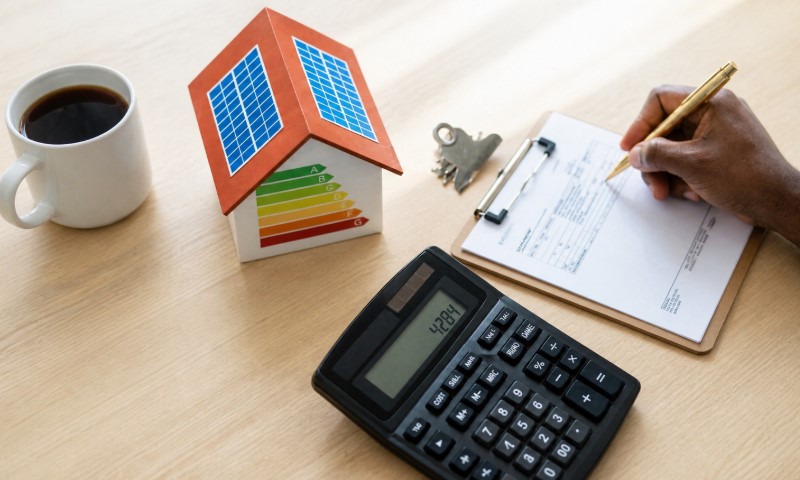
Professional valuation remains evidence-led. A valuer will look at comparable sales, location, size, condition, tenure, lease terms, rental evidence, and market sentiment. Energy performance usually enters through adjustments rather than a separate visible line.
Comparable Sales
If two similar homes sell in the same area, and one has a better EPC plus documented upgrades, the valuer may consider whether the stronger energy profile contributed to the sale price.
Cost To Cure
For inefficient homes, the valuer may think about the likely cost of bringing performance up to common market expectations.
Loft insulation may be relatively affordable. Solid wall insulation, window replacement, or heating system changes can cost far more.
Marketability
Homes with low running costs, modern systems, and clear upgrade records can be easier to market. Poor ratings may lengthen selling time or encourage lower offers.
Rental Income Risk
For landlords, energy performance can affect legal letting status, tenant demand, void periods, and future capital spending. Any factor that threatens rental income can feed into valuation.
Older Homes Face A More Complicated Path
Older properties often carry the biggest challenge. ONS analysis of EPC records for England and Wales found that dwellings built after 2011 had median scores equivalent to band B, while homes built before 1930 had median scores equivalent to band E. Existing dwellings also scored lower than new dwellings overall.
That gap is easy to explain. Newer buildings are more likely to have modern insulation, better glazing, more efficient heating systems, and tighter construction standards.
Older homes may have solid walls, suspended timber floors, heritage restrictions, aging roofs, or layouts that make retrofit work harder.
Still, older does not automatically mean poor value. A Victorian terrace in a strong location may outperform a newer home in a weaker area. Energy performance becomes one part of the valuation picture, not the entire picture.
Improvements That Tend To Matter Most

Not every upgrade affects value equally. Cosmetic changes can photograph well, but energy upgrades need to be visible, credible, and documented.
Common improvements with valuation relevance include:
- Loft and roof insulation
- Cavity wall or solid wall insulation where suitable
- High-quality double or triple glazing
- Efficient boilers, heat pumps, or heat networks
- Smart heating controls
- Solar panels with clear ownership details
- Draught-proofing and ventilation improvements
- Modern hot water cylinders and pipe insulation
Documentation matters. Receipts, warranties, building control approvals, installer certifications, guarantees, and updated EPCs help buyers trust the work. Without proof, an upgrade may carry less valuation weight.
Energy Performance And Commercial Property
In commercial real estate, energy performance can be even more direct. Office tenants, retailers, and corporate occupiers often have sustainability targets of their own. A building with poor energy performance can create reputational, operational, and reporting problems for tenants.
CBRE analysis of 20,000 U.S. office buildings found that LEED-certified offices had higher average rents than non-certified offices. After controlling for location, age, and renovation history, certified buildings still carried an average rent premium.
Commercial investors also think about obsolescence. A building that needs major energy upgrades may still have value, but buyers will calculate capital expenditure, downtime, tenant disruption, and future compliance risk. That can pull valuations down quickly in weaker office markets.
A Practical View For Owners
Owners should avoid assuming every energy upgrade pays back pound for pound at sale. Markets rarely work that neatly. The stronger case is usually risk reduction, wider buyer appeal, better comfort, lower bills, and stronger resilience against future regulation.
For a homeowner preparing to sell, the best first step is to review the EPC recommendations, then separate low-cost improvements from larger retrofit decisions. For landlords, compliance should come first.
For investors, energy performance belongs in the same folder as lease length, repair liabilities, local demand, and financing terms.
Final Thoughts
Energy performance now affects property valuation through bills, regulation, buyer psychology, rental risk, and future upgrade costs. A high rating can strengthen a property’s appeal, while a poor rating can create a discount, especially when legal compliance or expensive retrofit work enters the conversation.
Location still leads valuation. Yet energy performance has become too important to treat as background detail.