Classic balanced investing has long centered on the 60/40 portfolio: 60% stocks for growth and 40% bonds for stability.
That model worked well because it was simple and often effective.
In 2026, diversification needs a broader test.
Many investors may own stocks and bonds, yet still carry heavy exposure to U.S. large-cap growth, AI, technology, and a narrow group of market winners.
Broad index funds can include hundreds of holdings, but portfolio returns may still depend heavily on mega-cap technology and AI-linked companies.
Limits of Traditional Diversification in 2026
First, let us see what are the limits of the traditional diversification.
60/40 is not enough by itself

Old portfolio logic was clear: stocks provided growth, while bonds reduced risk. That relationship has become less reliable during volatile periods.
Since 2022, bonds have been more likely to sell off alongside equities, especially U.S. bonds. Inflation pressure, rate changes, and policy uncertainty have reduced the automatic hedge value many investors expected.
Bonds still matter, but they should not be the only defensive tool. A broader structure may use roughly half in global equities, about one third in fixed income, and the rest in hedges or alternatives.
Better diversification in 2026 means testing how each holding behaves under stress.
Broad indexes can hide concentration
Market-cap-weighted indexes can look diversified while leaning heavily on a few companies or sectors. Larger companies receive larger weights, so mega-cap winners can dominate portfolio risk.
AI is the clearest 2026 example. Investors may not buy an AI fund directly, but S&P 500 funds, total-market funds, growth funds, and technology ETFs may already give them large AI exposure.
Diversification should be measured by actual risk exposure, not by the number of holdings.
Rebalance before adding complexity
Rebalancing should come first. Many portfolios that began balanced have become equity-heavy after years of stock gains.
A portfolio that started 10 years ago with 60% stocks and 40% bonds could now hold more than 80% in stocks if left alone. That change may be accidental, but it increases risk.
Rebalancing discipline is weak. Only 30% of surveyed investors have a set schedule for adjusting investments.
A portfolio review should ask:
- Is the portfolio overweight U.S. stocks?
- Is it overweight large-cap growth?
- Is it too exposed to AI and technology?
- Is it underweight bonds, international stocks, value stocks, small caps, or dividend stocks?
- Has risk tolerance changed?
Often, the best diversification move is not adding a new product. It is restoring the intended balance.
What Should Diversification Include in 2026
When it comes down to diversification itself, it should include the following:
Digital assets as a limited satellite allocation
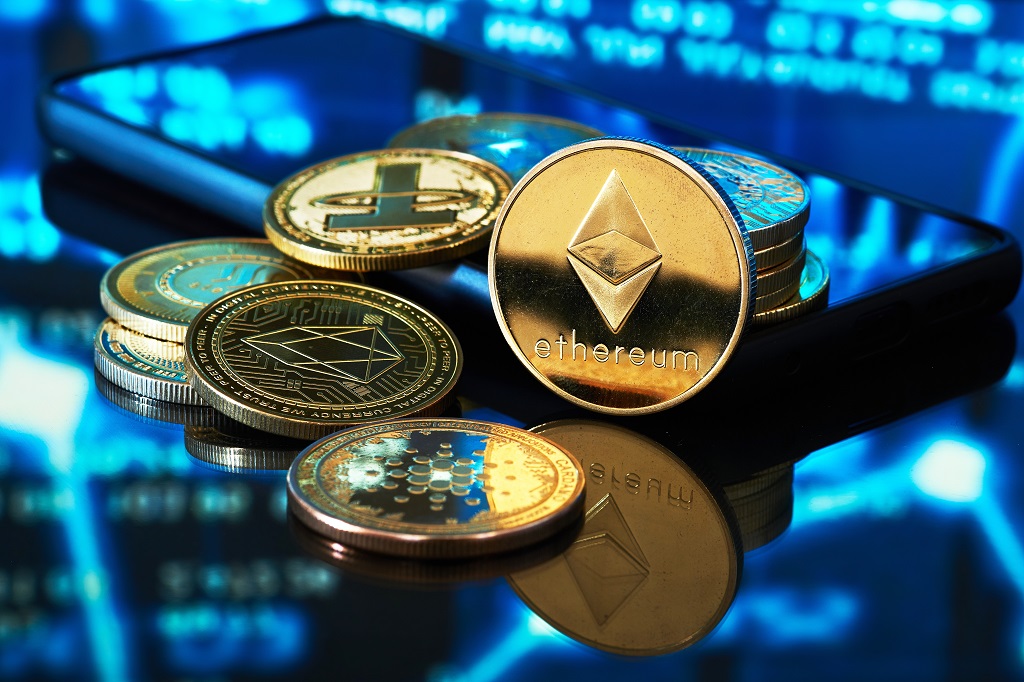
Crypto should not be a core diversifier for most investors. Volatility is high, and correlations can shift during market stress.
A small 2% to 5% digital-asset allocation may fit investors seeking asymmetric upside, as long as position size keeps downside risk controlled.
Risk limits should come before return expectations:
- Position size should be small enough to avoid damaging the full portfolio.
- Custody and security need careful review.
- Tax treatment should be clear before buying.
- Investor risk tolerance should match the possibility of sharp losses.
Digital assets should be optional. They may fit some portfolios, but they are not required for diversification.
Crypto investors who actively trade or rebalance digital-asset positions may also need tools for automation, order management, and exchange connectivity.
Platforms positioned as a 3commas alternative can be relevant here, but only as trading infrastructure, not as a substitute for portfolio risk controls.
High-quality bonds and cash-like reserves
Bonds still belong in many portfolios, especially for investors whose equity exposure has grown too large. Quality, maturity, and purpose matter.
High-quality bonds can reduce volatility. Short- and intermediate-term bonds can provide income without making the portfolio too dependent on long-duration rate bets.
Cash also has a clearer role in 2026. Recent investor plans show that cash is no longer only an emergency fund:
- 55% of investors plan to hold more money in savings or cash accounts in 2026.
- Cash can give investors room to act during sell-offs without selling long-term holdings.
- A cash cushion can reduce pressure to make emotional trades during market stress.
Cash is not a long-term growth engine, but it can improve investor discipline.
International equities
Non-U.S. stocks should be part of a serious diversification plan. U.S. markets are heavily tied to technology and AI, while international markets can offer different sectors, valuations, currencies, and economic cycles.
Many investors may now be underweight international stocks after years of U.S. outperformance. Rebalancing can restore global exposure.
Developed markets and emerging markets should be treated separately because they play different roles:
Developed markets can add exposure to established global companies and mature economies.
Emerging markets can add growth potential, but with higher volatility and political risk.
Global exposure reduces dependence on a U.S.-heavy portfolio.
Value and small-cap stocks
Style balance matters. Large-cap growth has dominated many portfolios, especially through AI and technology exposure.
Broad U.S. index funds often carry large-cap growth bias. Adding value and small-cap exposure can reduce dependence on mega-cap growth stocks.
Value stocks may provide exposure to lower-priced companies based on earnings, book value, or cash flow. Small caps can respond differently to rates, credit conditions, and domestic growth.
Adding value and small caps does not mean selling all large-cap growth. It means balancing the portfolio across styles.
Dividend-paying stocks
Dividend stocks can add income, quality exposure, and defensive equity characteristics.
Dividend strategies often include companies with established cash flows and payout discipline.
Several sectors often play a larger role in dividend-focused allocations:
- Utilities
- Healthcare
- Consumer staples
- Financials
Dividend stocks can also reduce dependence on non-dividend-paying growth companies and AI-linked leadership.
Payouts are not guaranteed, and dividend stocks can still lose value. Even so, dividend exposure can add a useful return source inside the equity allocation.
Gold and real assets
Gold can hedge geopolitical stress, currency concerns, and market instability.
Short-term corrections of 5% to 10% are possible, but structural support remains strong. Two figures show why gold is getting more attention in 2026:
95% of world central banks expect to increase gold reserves in 2026.
More than 755 tonnes could potentially be added during the year.
Some investors may consider 10% to 20% in gold, depending on goals and risk tolerance. That range is not universal.
Real assets can also include commodities, infrastructure, real estate, and natural resource equities. These assets may help reduce inflation, currency, geopolitical, and market-regime risk.
Alternatives and private-market exposure
Alternatives are now mainstream. About 55% of investors own at least one alternative asset.
Potential categories include private credit, private equity, real estate funds, infrastructure, hedge-fund-like strategies, and commodities.
Risk control matters because alternatives can create problems that traditional funds may not:
- Higher fees can reduce net returns.
- Limited liquidity can make exits difficult.
- Complex structures can make risk harder to judge.
- Unclear pricing can delay recognition of losses.
- Suitability issues can arise when products do not match investor needs.
Alternatives should have a clear job in the portfolio. An asset that an investor cannot hold during weak periods may damage results instead of improving them.
Summary
Diversification in 2026 should include global exposure, style balance, income, real assets, alternatives, liquidity, and disciplined rebalancing.
Goal is not to own everything. Better aim is to avoid relying on one country, one sector, one theme, one asset class, or one market regime.
Best 2026 portfolio is not the most complicated one. Better portfolio is built to survive more than one version of the future.