Auto repair shops lose money in quiet places: missed labor time, parts ordered twice, estimates left unsent, customers waiting for updates, and invoices that sit too long. Good shop software fixes those leaks by putting parts, labor, scheduling, inspections, payments, and customer communication in one system.
That matters more in 2026 because the business is busy and labor remains tight. IBISWorld estimates the U.S. auto mechanics industry at $92.1 billion in 2026, with about 307,000 businesses.
BLS also projects around 70,000 automotive service technician and mechanic openings per year from 2024 to 2034, mostly due to replacement needs. Shops that can organize work faster have a real operational edge.
Quick Comparison Table
| Software | Best For | Strongest Areas |
| AutoLeap | Growing independent, multi-location, and larger repair operations | Estimates, invoices, customer communication, reporting |
| Shopmonkey | Modern shops wanting clean workflows | CRM, inventory, scheduling, invoices |
| Tekmetric | Busy shops and multi-location operators | DVIs, payments, reporting, marketing |
| Mitchell 1 Manager SE | Established shops needing repair data links | Parts catalogs, reports, estimates, scheduling |
| Shop-Ware | Shops focused on transparency | Digital estimates, photos, videos, chat |
| NAPA TRACS | Shops tied closely to parts ordering | Estimating, parts ordering, service history |
| Protractor | Single or multi-location shops | Workflow, inspections, work orders, inventory |
| ARI | Mobile mechanics and smaller shops | Invoicing, client management, labor guides |
How To Choose Auto Repair Software
A strong platform should help the service writer, technician, owner, and customer at the same time. Look closely at 5 areas before signing up:
- Parts ordering and inventory visibility
- Labor tracking and technician workflow
- Estimate approvals and digital inspections
- Customer messaging and service reminders
- Payments, reporting, and accounting links
Price matters, but workflow fit matters more. A low-cost tool that slows down advisors can become expensive fast.
1. AutoLeap
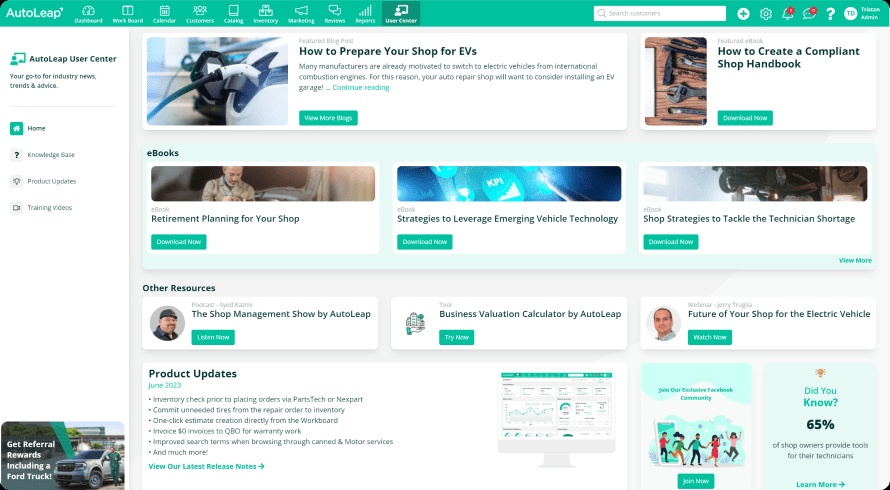
AutoLeap deserves a prominent spot because it covers the full front-office and back-office rhythm of repair businesses, from growing independent shops to larger multi-location operations.
The platform positions itself as an all-in-one auto repair shop management system for estimates, invoices, customer communication, scheduling, inspections, payments, and reporting.
Where AutoLeap stands out is its fit for owners who want clearer control over daily operations. A shop can move from inspection to estimate, approval, repair order, invoice, and follow-up without stitching together separate tools.
For parts and labor, AutoLeap works best for teams that want fewer handoffs. Service advisors can build estimates, communicate digitally with customers, and keep jobs moving while technicians stay focused on the bay.
Customer-facing features also help reduce phone tag, especially when approvals, updates, and reminders happen inside one workflow.
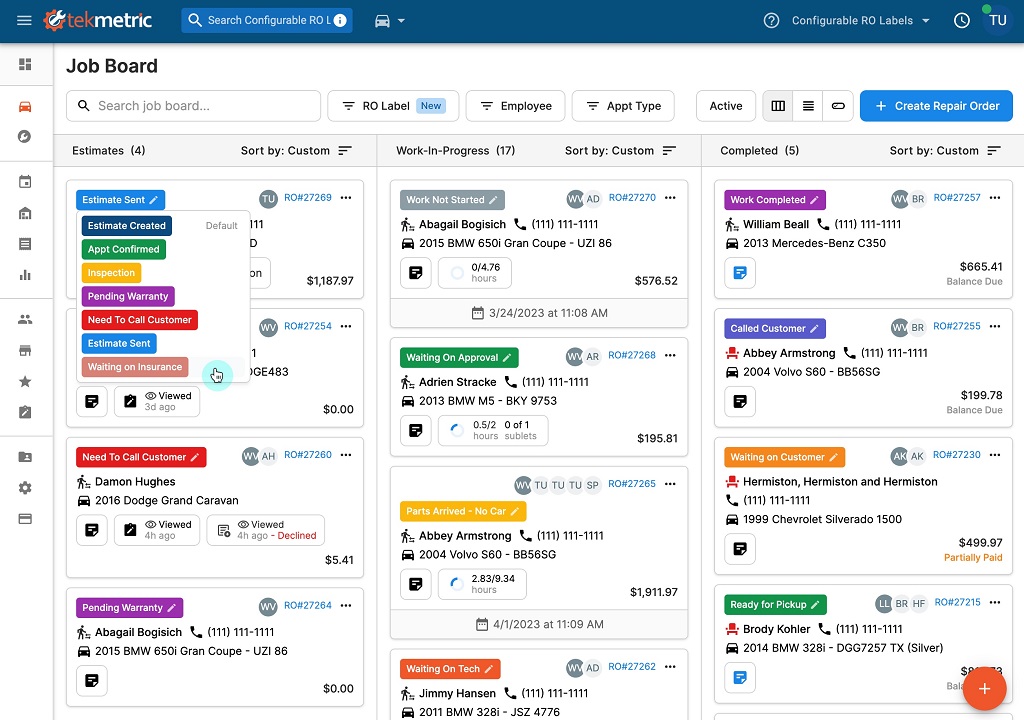
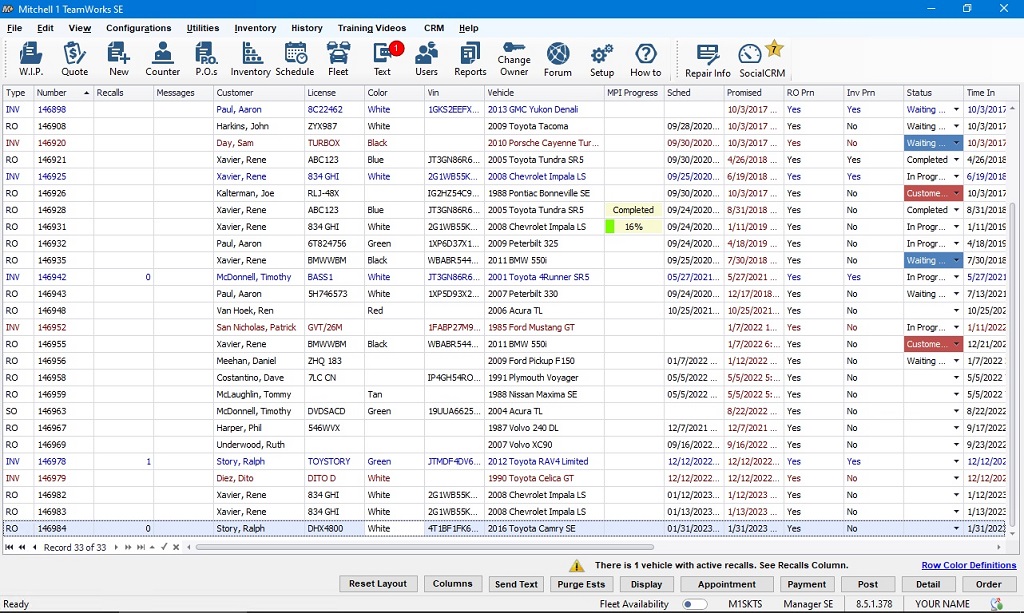
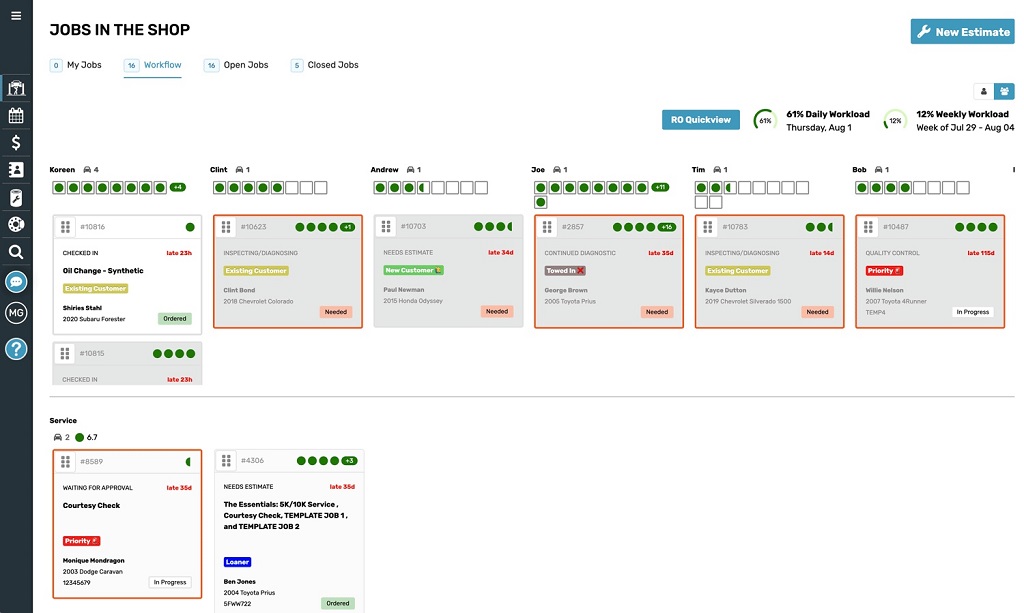
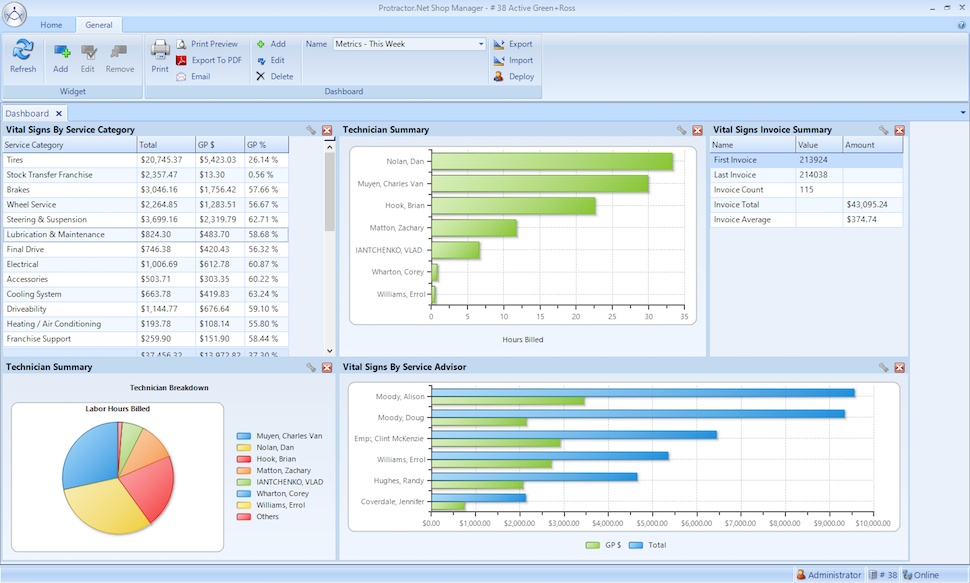
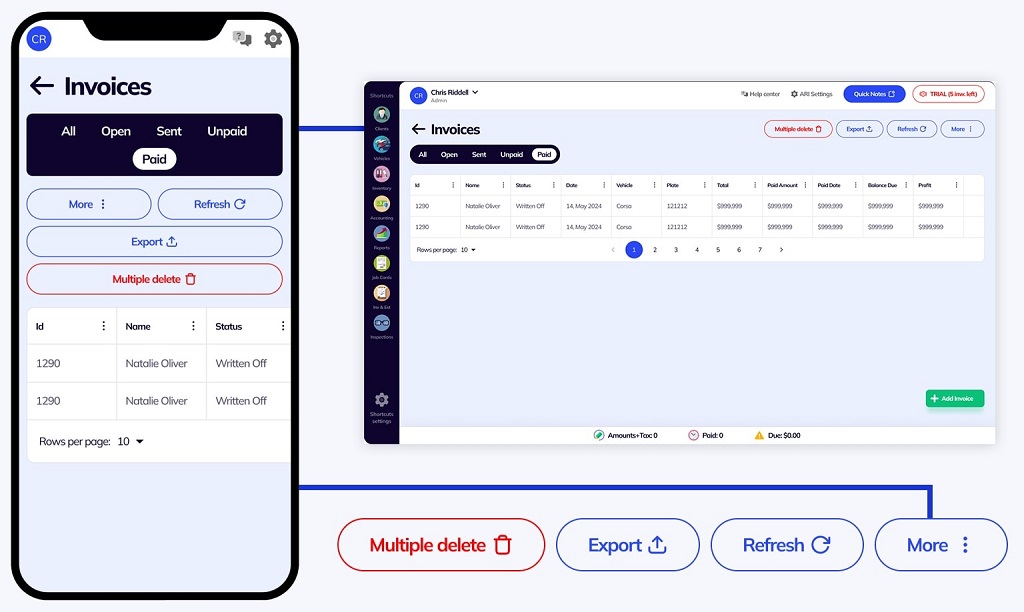
Shopmonkey has become one of the better-known cloud platforms for repair shops that want a polished, easy-to-use interface. Its official site describes a system covering invoices, point-of-sale functions, CRM, inventory, scheduling, and more. Shopmonkey also promotes itself across several shop types, including general repair, heavy duty, wrap, detail, restoration, and RV-related work. The strongest use case is a shop that needs order without a steep learning curve. Customer records, vehicle histories, estimates, invoices, and messages can live in one place, which helps advisors avoid the classic desk clutter of sticky notes, whiteboards, and half-finished tickets. For parts management, Shopmonkey can help track inventory and purchasing needs. For customer management, its CRM angle matters. Repeat work depends on follow-ups, reminders, declined-job tracking, and clear communication after the first repair. Tekmetric is built for shops that want data, process control, and scalability. The company says its platform helps shops manage estimates, payments, marketing, and more from one system, and notes that it is trusted by more than 15,000 shops. Its shop management page lists popular features such as marketing, payments, estimates, reporting, digital vehicle inspections, online scheduling, and multi-shop management. That mix makes Tekmetric especially relevant for busy operators who track numbers closely: average repair order, technician productivity, gross profit by category, approval rates, and customer retention. Parts and labor handling also gets stronger when paired with reporting. A shop owner can see whether lost margin is coming from weak parts markup, missed labor, low inspection conversion, or scheduling overload. Mitchell 1 Manager SE has a long reputation in repair shop software, and its appeal is tied to shop management plus repair-information depth. The official Manager SE page highlights organized estimates and invoices, more than 180 reports, mobile vehicle inspections, scheduling, and a large selection of digital parts catalogs. For many established shops, the parts catalog connection is the major draw. Mitchell 1’s Canadian Manager SE page says the system connects to aftermarket parts catalogs for electronic sourcing, stock checks, ordering, tracking, purchase order control, and visual parts-status history. That can save real time when a service writer needs to quote accurately while the phone is ringing and a technician is waiting. Labor and repair data links also help shops quote with more consistency. Shop-Ware leans into transparency and customer experience. Its site says the estimating software lets shops prepare and share quotes quickly using photos, videos, and chat. The platform also offers inventory tools that help shops order, track inventory, and monitor part statuses in real time. That approach fits modern customers. Drivers often want to see why a repair is needed before approving a $900 job. A photo of a leaking strut or worn brake pad can explain more than a rushed phone call. For parts, Shop-Ware’s inventory feature is useful because part status is often where delays hide. Waiting, ordered, received, backordered, installed, and returned should never be mysteries. NAPA TRACS is a natural candidate for shops that want shop management tied closely to parts ordering. Its official site emphasizes fast estimates, parts ordering, customer updates, integrated payments, and service history. NAPA also describes its professional services as a suite of estimating, shop management, and technical software tools for installer customers. The value here is practical. Many shops already work closely with NAPA for parts. A system aligned with that supply chain can reduce friction when building estimates and moving from quote to work order. Customer updates and service history matter too. Service advisors need to know what was done, what was declined, what is due soon, and what can wait. Protractor is aimed at professional repair operations that want structure across scheduling, inspections, estimates, work orders, parts, inventory, and multi-location management. Its official site describes Protractor as an all-in-one platform for single and multi-location businesses, while its feature overview mentions work orders, inventory, communication, profit centers, team communication, and data security. Protractor’s workflow tools are also worth noting. Its shop management page describes technician views, color-coded workflow screens, and prioritization tools that help staff see job status at a glance. That kind of visibility can reduce interruptions. Instead of asking where the Civic is, whether the parts arrived, or who has the inspection, staff can check the workflow board. ARI is a good option for smaller operations, mobile mechanics, independent technicians, and shops that need core features without a heavy enterprise feel. Its official page highlights invoices, online appointments, inventory, vehicle management, QuickBooks Online syncing, customer and inventory management, payment processing, and AI labor guides. The mobile angle matters. A one-person mechanic or small team may need to create estimates, store client records, assign vehicles, generate invoices, and collect payments without a full front office. ARI may not be the first choice for a large shop with several advisors and multiple locations, but it can be appealing for leaner businesses that want faster admin with less setup. The best auto repair software depends on shop size, workflow, and parts strategy. AutoLeap, Shopmonkey, and Tekmetric suit many modern independent shops. Mitchell 1 Manager SE and NAPA TRACS are strong for parts and established workflows. Shop-Ware and Protractor fit shops that care deeply about digital inspections and process visibility. ARI works well for smaller teams that need simple, capable management tools. A good decision starts with one question: where does the shop lose the most time today? The right platform should close that gap first.2. Shopmonkey
3. Tekmetric
4. Mitchell 1 Manager SE
5. Shop-Ware
6. NAPA TRACS
7. Protractor
8. ARI
Final Thoughts