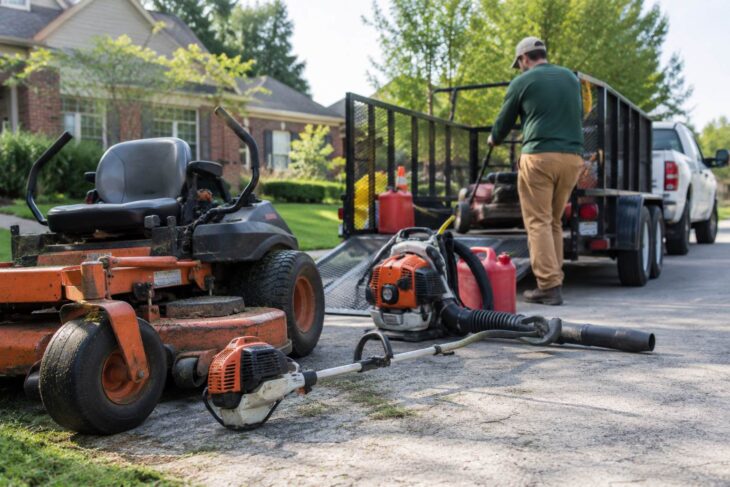
You do not need a $40,000 truck and a brand-new commercial mower to start a landscaping business. If you already own a suitable vehicle, a mower, a trimmer and a blower could be enough to begin serving residential customers.
However, there is a big financial gap between mowing a few lawns on weekends and running a full-time landscaping company with employees, trailers and professional equipment.
For 2027, plan on $3,000 to $8,000 for a small solo lawn care business if you already have transportation. A more established one-person operation may need $12,000 to $25,000, while a company starting with employees and larger equipment could require $40,000 to $80,000 or more.
Those are planning ranges based on equipment and operating costs available in 2026, not confirmed 2027 prices. The services you offer, the equipment you already own and your local insurance requirements will determine how much money you actually need.
Landscaping Business Startup Costs
Someone cutting residential lawns has very different expenses from a contractor installing patios, retaining walls and irrigation systems.
| Business Type | Estimated Startup Budget | What It Covers |
| Part-time lawn care | $3,000 to $8,000 | Basic equipment, insurance, registration and starting supplies |
| Full-time solo landscaping | $12,000 to $25,000 | Commercial equipment, trailer, insurance, marketing and operating cash |
| Small landscaping crew | $40,000 to $80,000+ | Additional equipment, vehicle costs, payroll and working capital |
| Installation and hardscaping business | $50,000 to $100,000+ | Specialist tools, material purchases, transport and higher operating expenses |
The ranges are illustrative U.S. startup budgets for 2027, using published 2026 costs. Vehicle purchases, local permits and specialised equipment can push spending higher.
Equipment estimates published by The Green Industry put a basic commercial push-mower setup at $3,129 to $4,399 and a solo zero-turn setup at $12,761 to $18,175, before buying a truck.
1. Lawn Mowers and Other Essential Equipment
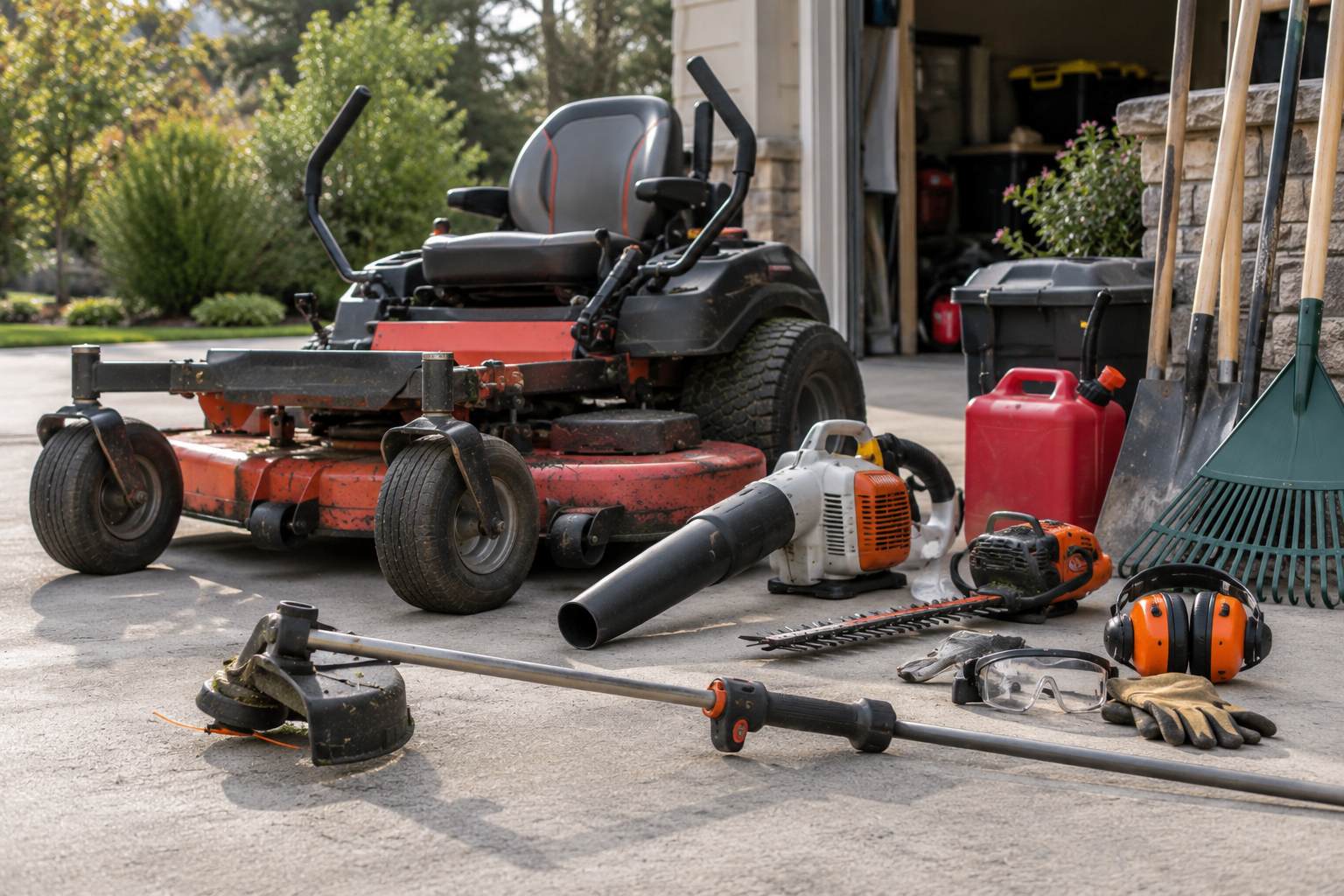
Your first equipment purchase should match the lawns you expect to maintain. A large zero-turn mower is unnecessary if your customers have small yards with narrow gates and limited access.
A push mower or commercial walk-behind model can handle smaller residential properties. A zero-turn mower becomes more attractive when you have enough large lawns to keep it working throughout the week.
| Equipment | 2027 Planning Budget |
| Walk-behind mower | $500 to $2,500 |
| Commercial zero-turn mower | $3,500 to $12,000 |
| String trimmer | $150 to $600 |
| Leaf blower | $150 to $600 |
| Hedge trimmer and edger | $200 to $900 combined |
| Rakes, shovels, pruners and other hand tools | $150 to $500 |
| Safety equipment and fuel containers | $100 to $300 |
Budget allowances based on published 2026 equipment prices. Actual 2027 prices will depend on brand, condition and supplier.
Used equipment can reduce initial spending, but inspect it carefully. A mower with worn belts, leaking hydraulics or engine problems can become more expensive than a well-maintained alternative.
Keep money available for replacement blades, trimmer line, oil and repairs. Equipment that breaks down during a busy week can cost you both repair money and lost bookings.
2. Truck and Trailer Costs
Transportation can become the most expensive part of starting a landscaping business.
If you already own a pickup truck capable of carrying or towing your equipment, the initial investment falls considerably.
A used open utility trailer might cost $600 to $3,500, depending on size, condition and local availability. A new commercial trailer can cost considerably more.
Buying a used work truck may add $8,000 to $25,000 or more to your startup budget.
Before purchasing a trailer, check the vehicle towing capacity, trailer weight, equipment weight and local registration requirements. Remember that fuel consumption and maintenance will increase with regular commercial use.
A small mowing business may begin without a trailer if the vehicle can transport the equipment safely. Larger mowers generally require a suitable trailer and proper loading ramps.
3. Business Registration, Licenses and Insurance
@inspire.by.annieGood business registration starts with understanding the business, not just completing the paperwork. Inspire by Annie Business Studio Small Steps to a Better Financial Future 🦋♬ original sound – Inspire by Annie Business
Landscaping companies need to follow the rules in the states and cities where they operate.
The U.S. Small Business Administration notes that state business registration commonly costs less than $300, although fees and licensing requirements vary by location.
A federal Employer Identification Number is free through the IRS. Other expenses may include local business licenses, business-name registration and permits connected to specific services.
Applying pesticides professionally may require an applicator license. Installing irrigation systems, retaining walls or other structures can also bring contractor licensing requirements.
Insurance deserves a separate budget. For a small lawn care operation, general liability insurance may cost several hundred dollars to more than $1,500 annually, depending on the work and coverage limits.
Commercial vehicle insurance, equipment coverage and workers compensation can add substantially to the cost. Obtain quotes that describe your actual services before taking on customers.
4. Which Landscaping Services Should You Offer First?
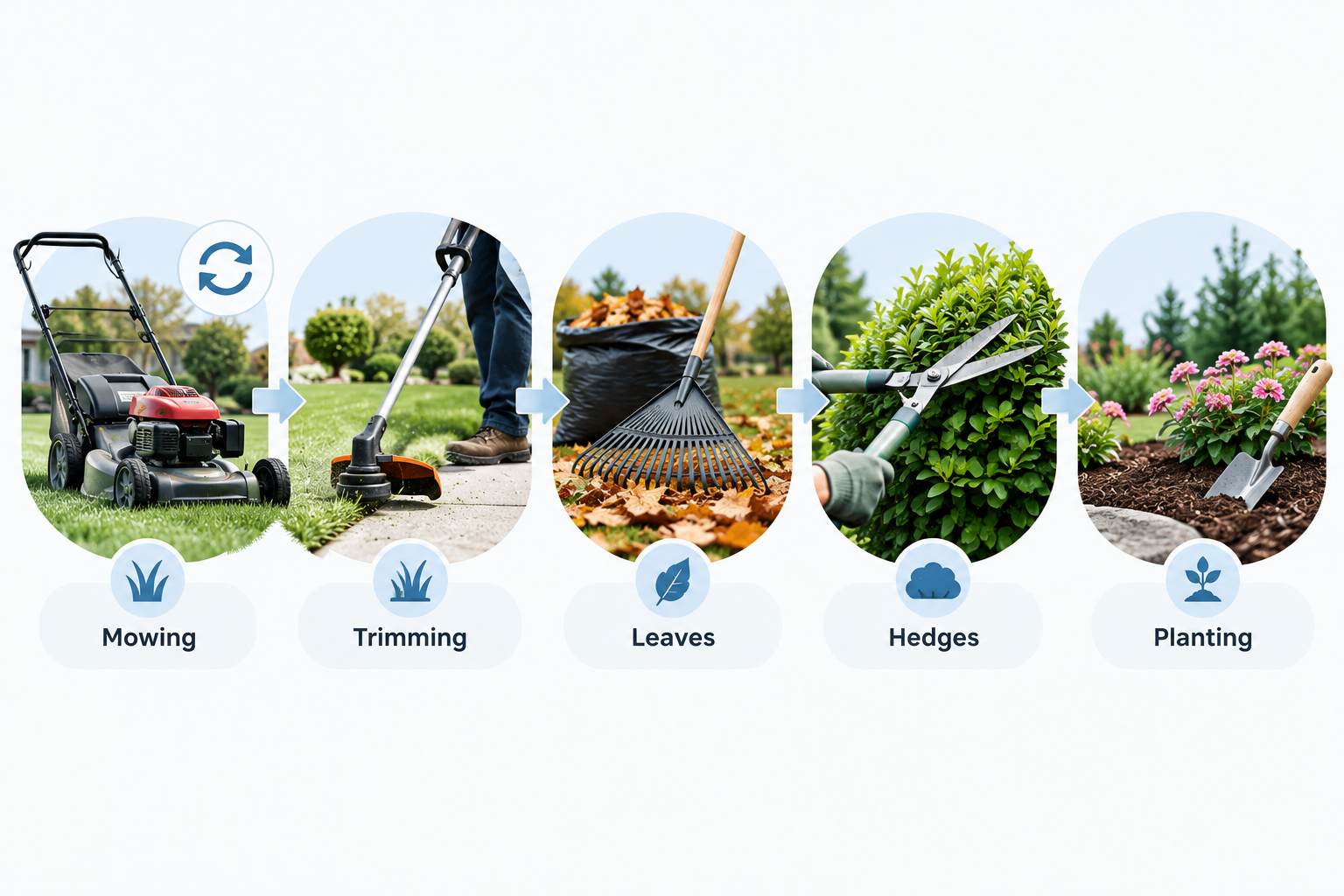
Offering every outdoor service from the beginning sounds appealing, but it usually means buying more equipment before you have customers.
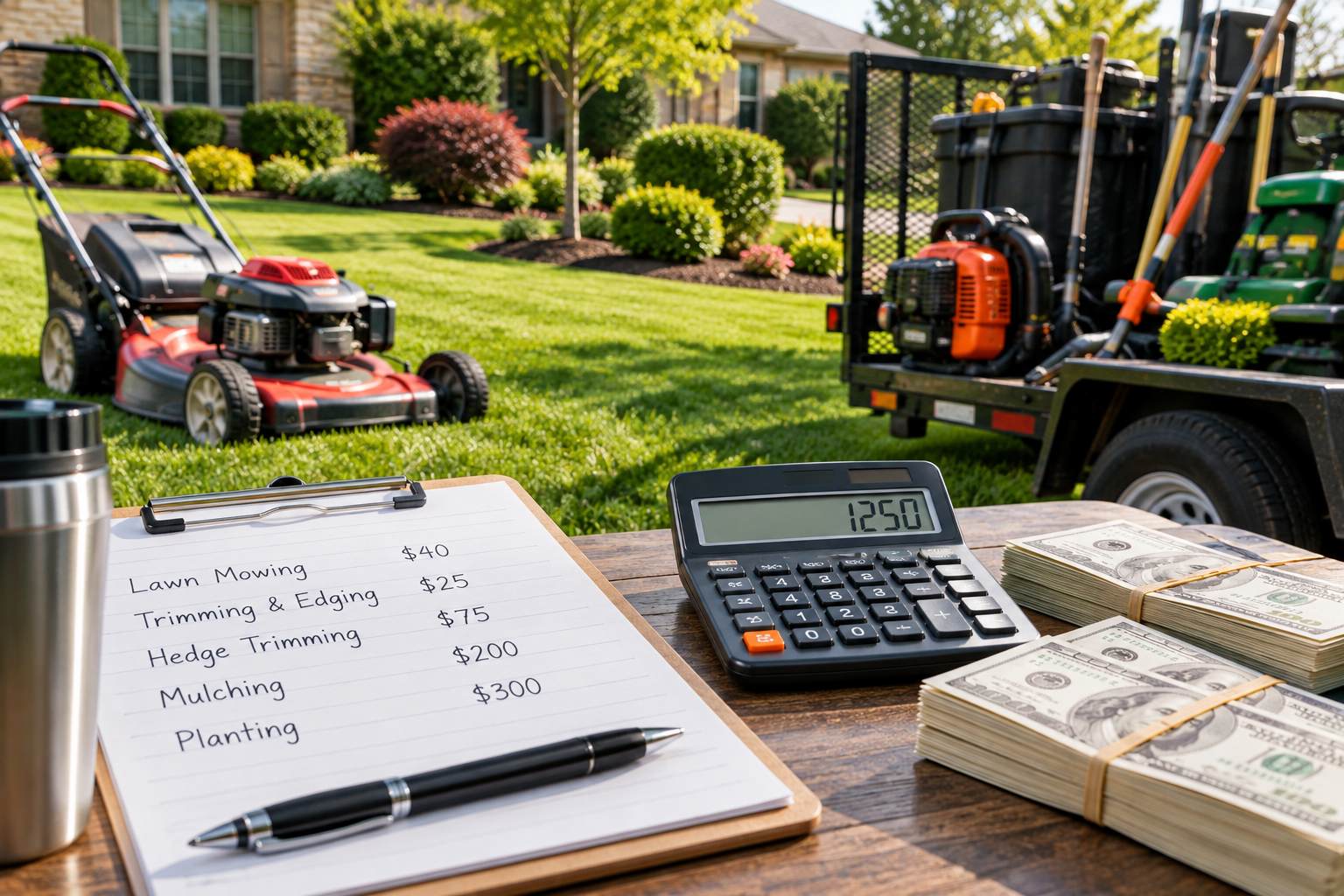
- Lawn mowing. Regular weekly or biweekly visits can create predictable revenue.
- Trimming and edging. Add them to mowing packages rather than making separate trips.
- Leaf removal. Useful seasonal work when mowing demand slows.
- Hedge trimming. Suitable when you have the tools and experience to perform the work safely.
- Mulching and planting. Possible additional services with relatively modest hand-tool expenses.
Residential lawn care is one of the best small business ideas with lower startup costs, particularly for owners who begin with equipment they already have.
After gaining customers, you can introduce services that require more training, materials and specialist equipment.
5. Adding Garden Renovation and Outdoor Installation Services
A landscaping company can increase its revenue by moving from routine lawn maintenance into garden renovations, provided the owner has the necessary skills, insurance and licenses.
Projects such as replacing planting beds, repairing garden borders, installing gravel paths and improving drainage can bring larger invoices than regular mowing.
Some customers may also want new composite fencing as part of a garden renovation, but installation costs, boundary requirements and suitable foundations must be assessed before offering that service.
Do not purchase expensive machinery for a single customer request. Rent compact equipment when the job justifies it, then consider ownership once you have enough confirmed work.
For installation projects, collect an appropriate deposit under a written contract and order materials against the agreed scope. Paying thousands of dollars for materials before securing a customer commitment can put serious pressure on a young business.
6. How Much Should You Spend on Marketing?
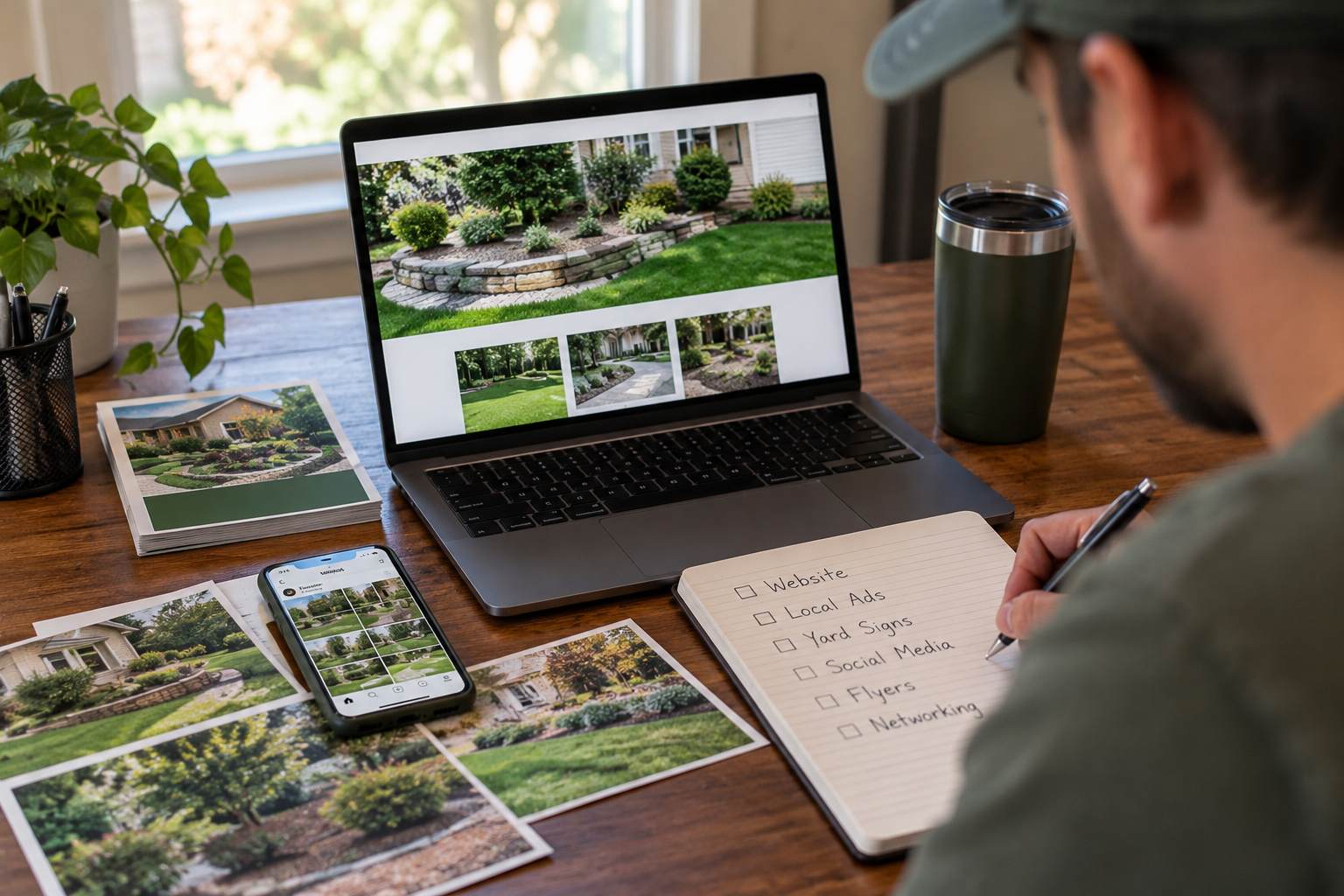
A new landscaping business does not need an expensive advertising campaign to find its first customers.
Start with a Google Business Profile, clear photographs of completed work and accurate contact information. Ask satisfied customers for genuine reviews and referrals.
Simple door hangers and yard signs may help in neighborhoods where you already work. Concentrating on a few nearby streets also reduces time spent driving between jobs.
A basic business website can show your services, service area, contact details and examples of finished projects. Keep the pages simple and make it easy for customers to request an estimate.
For the initial marketing budget, allow $200 to $1,000 if you handle most of the work yourself. A professionally built website, vehicle graphics and paid advertising can increase that figure.
Measure which marketing methods lead to actual paying customers before increasing spending.
7. Monthly Expenses You Need to Cover
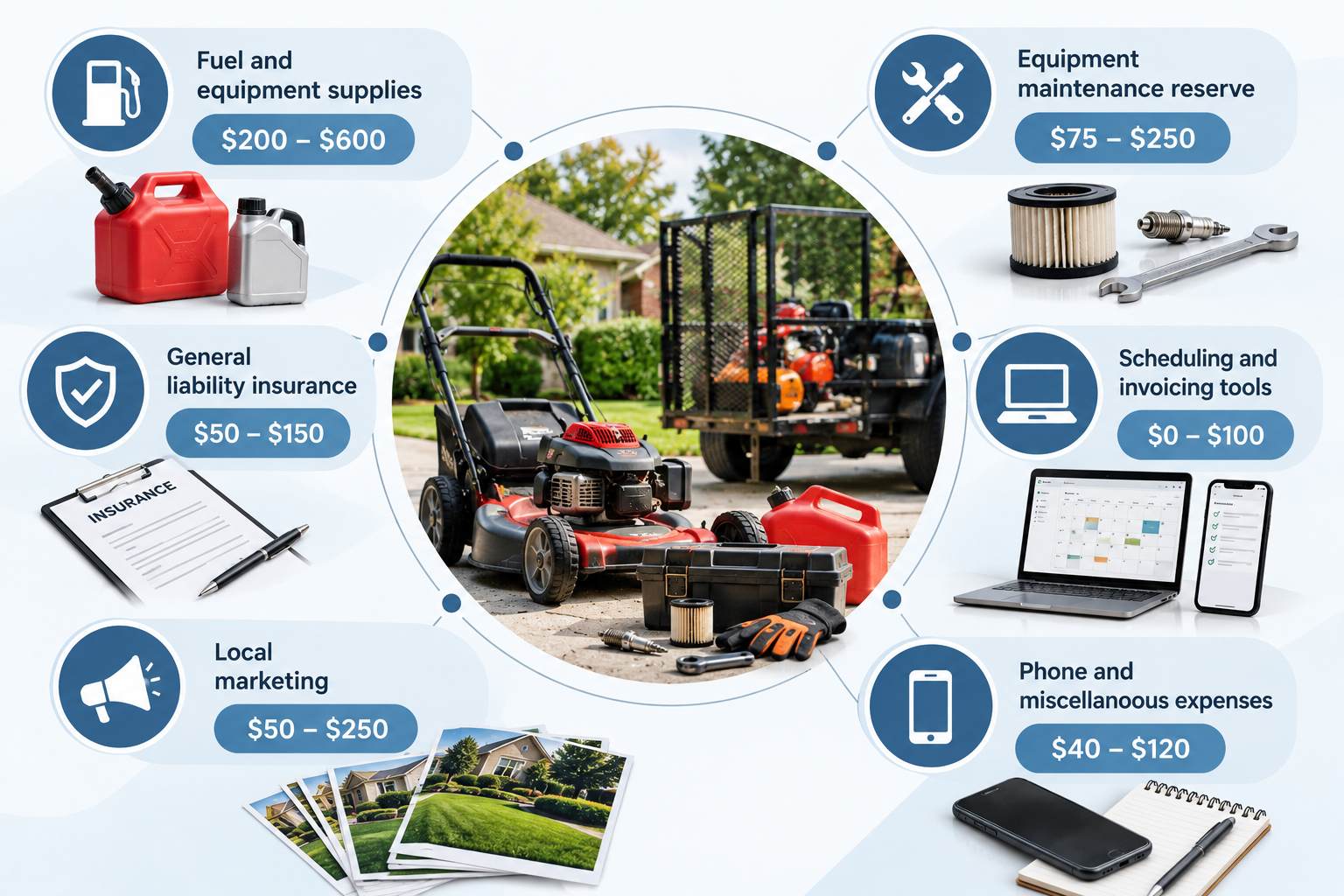
Buying equipment is only the beginning. Fuel, maintenance, insurance and operating supplies continue costing money even during quiet weeks.
| Monthly Expense | Planning Allowance |
| Fuel and equipment supplies | $200 to $600 |
| Equipment maintenance reserve | $75 to $250 |
| General liability insurance | $50 to $150 |
| Scheduling and invoicing tools | $0 to $100 |
| Local marketing | $50 to $250 |
| Phone and miscellaneous expenses | $40 to $120 |
Illustrative allowances for a solo operation. Vehicle finance, commercial auto insurance, payroll, taxes, rent and owner living expenses are not included.
Keep a reserve for slow periods and equipment failures. A broken mower during peak season should not force you to borrow money to finish scheduled jobs.
8. How Much Can a Landscaping Business Earn?
Revenue depends on the number of customers, job prices, travel time and how many weeks you can work each year.
Consider a solo operator charging $60 per lawn visit and completing 25 visits per week.
| Calculation | Amount |
| Price per visit | $60 |
| Weekly visits | 25 |
| Weekly revenue | $1,500 |
| Revenue over 35 working weeks | $52,500 |
The $52,500 represents sales, not personal income or business profit. Fuel, insurance, maintenance, taxes and other expenses still need to be paid.
Bad weather, cancellations and travel between customers can also reduce the number of visits completed.
When setting prices, calculate the time spent travelling, unloading equipment, performing the work and collecting payment. A $60 job that takes two hours from departure to return earns less per hour than one completed in 45 minutes.
9. When Should You Hire Your First Employee?
Hiring someone before you have enough regular work can quickly drain your cash reserve.
Before adding an employee, work out how many extra paid jobs the business can complete with a second person and how much those jobs will bring in.
Wages are only part of the cost. Employers may also owe payroll taxes, unemployment insurance and workers compensation, depending on the location and employment arrangement.
Additional equipment and transport may be necessary as well.
Wait until the workload supports the added expenses consistently, not just during one unusually busy week.
10. A Sample $10,000 Landscaping Startup Budget
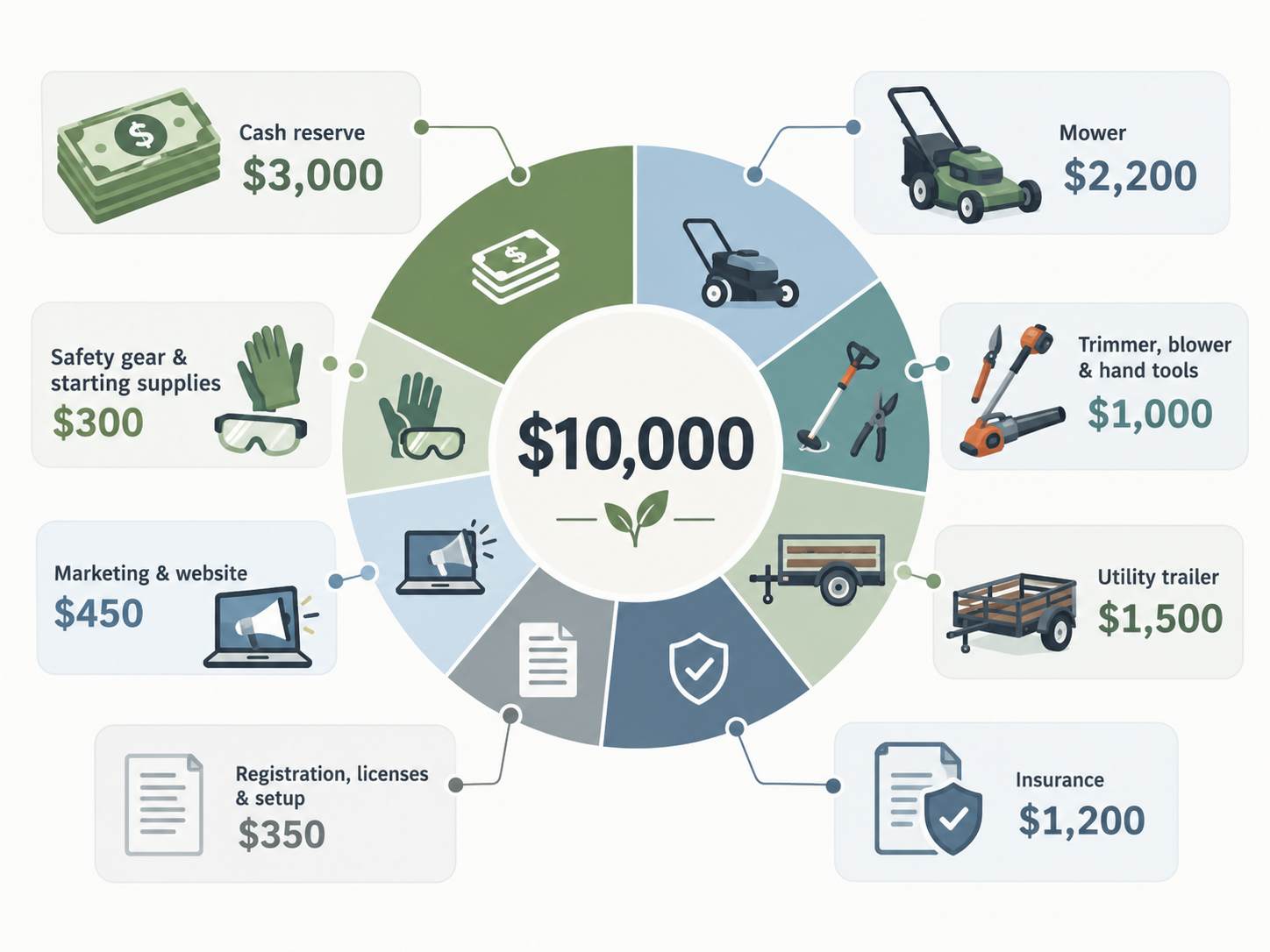
Here is one way to divide $10,000 if you already own a suitable vehicle and want to start a solo residential lawn care business.
| Expense | Budget |
| Used commercial walk-behind mower | $2,200 |
| Trimmer, blower and hand tools | $1,000 |
| Used utility trailer | $1,500 |
| Insurance allowance | $1,200 |
| Registration, licenses and setup | $350 |
| Marketing and website | $450 |
| Safety gear and starting supplies | $300 |
| Cash reserve | $3,000 |
| Total | $10,000 |
The reserve covers unexpected costs and operating expenses before customers pay. It is not a replacement for personal savings or a larger emergency fund.
Use supplier quotations and insurance estimates to adjust the budget for your location. The SBA startup cost guidance also explains how to separate initial purchases from recurring expenses when calculating the money needed to open a business.
Last Words
Starting with residential maintenance can keep expenses manageable. You can buy a limited set of reliable equipment, work within a small service area and add services as customers begin booking regularly.
For someone who already owns a truck, a budget of $3,000 to $8,000 may cover a modest start. A full-time commercial setup will need considerably more, especially if a trailer, larger mower or additional vehicle must be purchased.
I would begin with mowing, trimming and seasonal cleanups rather than spending heavily on specialist landscaping equipment. Build a regular customer list, track the profit from each job and reinvest when the workload supports expansion.
The biggest financial mistake is buying equipment for the business you hope to have in three years instead of the jobs you can sell during your first month.