You should not take your first catering booking until you have chosen a catering model that fits your legal obligations, registered both the business and the food operation, secured a permitted kitchen, implemented a basic food safety system, arranged insurance, completed required training, and built a pricing structure that cannot lose money.
Most catering businesses that fail do not fail because of food quality. They fail because they take bookings before these foundations are in place.
1) Pick a catering model that matches your compliance path
Most first-time caterers fail because they choose a business model that silently forces higher costs, stricter inspections, and staffing complexity they are not ready to manage. The food itself is rarely the problem. The structure is.
Catering is not one business. It is several different operational models that happen to involve food. Each model comes with a different compliance burden, labor profile, and risk exposure. Choosing the wrong one early can lock you into expenses you cannot scale out of.
| Model | What it is | Why is it attractive | Hidden constraint |
| Drop-off catering | Deliver packaged trays, minimal on-site service | Lowest labor, simplest operations | Still requires safe transport and temperature control |
| Buffet with setup | You set up chafers, guests self-serve | Popular for parties and events | Requires hot holding equipment and strict time controls |
| Full-service plated | Staffed service, plated meals on site | Higher ticket size per guest | Highest labor cost, staffing risk, timing risk |
| Corporate recurring | Weekly or monthly standing orders | Predictable revenue | Tight service level agreements and late penalties |
A practical and survivable starting path is drop-off catering, followed by buffet service, and only later full-service plated events. Drop-off allows you to master food production, transport, labeling, and client communication without needing on-site staff or extended service windows. Once those systems are repeatable, expansion becomes a choice rather than a gamble.
2) Business registration and food registration are not the same thing
This is one of the most common early mistakes. Registering a company does not give you the legal right to sell food.
In most jurisdictions, you need two separate approvals:
- A basic business registration for tax and legal purposes
- A food business registration or permit issued by a health authority
In the UK, for example, food businesses must register with the local authority at least 28 days before starting to trade. This means your first booking must occur after that registration window. Booking an event earlier, even if you have not yet served food, can already place you in violation.
In the US, requirements vary by state and city, but catering is typically treated as a permitted food operation. Many jurisdictions require a specific catering permit and, if you do not own a kitchen, a formal commissary agreement. Federal food rules may apply on top of state and local licensing, ng depending on what you produce and where.
A simple decision rule applies everywhere: if you cannot clearly explain which authority inspects your operation, you are not ready to take a booking.
3) Kitchen reality: you usually need a permitted kitchen or commissary
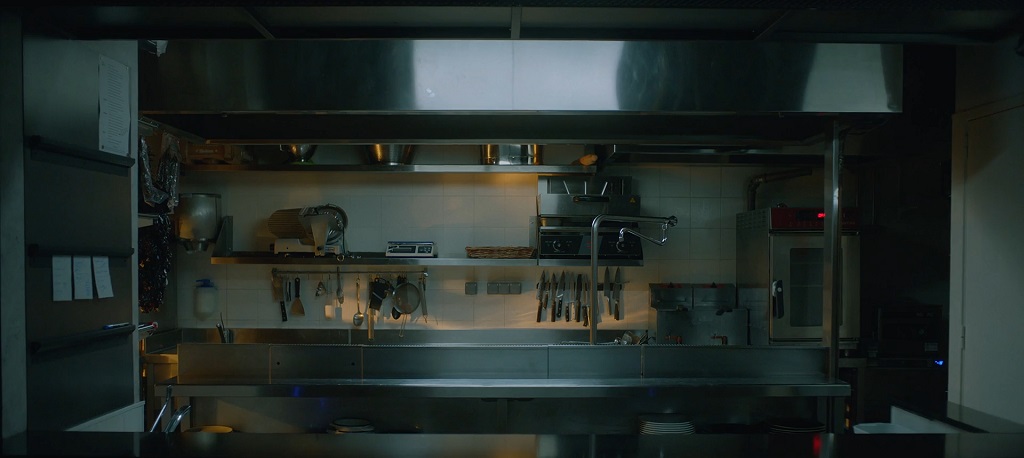
Most new caterers underestimate how closely kitchens are scrutinized. The fastest legal route into catering is rarely building a kitchen from scratch. It is usually one of two options.
You either rent time in a licensed commercial kitchen or you operate under a commissary or shared kitchen agreement. In many cities, health departments explicitly require caterers to name a permitted base kitchen where all preparation, cooling, storage, and cleaning occur.
Inspectors do not care where you “mostly cook.” They care where food is legally prepared and controlled.
| Item | What inspectors care about | What you should document |
| Approved facility | Where food is prepped, cooked, cooled, and stored | Lease or commissary agreement, address, access hours |
| Cold storage | Refrigerator capacity and temperatures | Temperature logs, thermometer calibration |
| Handwashing | Dedicated sink, soap, paper towels | Cleaning and restocking schedule |
| Warewashing | Dish sink or dishwasher | Sanitizer concentration checks |
| Storage | Food off floor, labeled, dated | FIFO labeling system |
If you plan to prep from home, you must confirm whether your jurisdiction allows it and under what category. Home food rules vary widely and often prohibit catering entirely. Assuming home preparation is allowed without written confirmation is one of the fastest ways to be shut down.
4) Food safety is not vibes. It is a system
Catering operates under a higher food safety risk than restaurants. Food is cooked, cooled, transported, held, and sometimes reheated. Each step introduces danger if unmanaged.
Most regions require food safety controls based on HACCP principles. Even when not explicitly mandated, operating without them exposes you to illness, refunds, chargebacks, and reputational damage you cannot recover from early on.
For catering, written controls are essential for:
- Cooling
- Cold holding
- Hot holding
- Transport
- Reheating
- Service time
There are concrete numbers you must build into your standard operating procedures. These numbers determine what equipment you need and what services you can safely offer.
| Control | Standard safety threshold |
| Cold holding | 41°F / 5°C or below |
| Hot holding | 135°F / 57°C or above |
| Cooling stage 1 | 135°F → 70°F within 2 hours |
| Cooling stage 2 | 70°F → 41°F within 4 additional hours |
If you cannot hold food hot at safe temperatures, you cannot legally or safely offer buffets. If you cannot cool food within the required window, you cannot batch cook for future events. These are operational facts, not preferences.
5) Training and certified management reduce risk fast

Many jurisdictions require at least one certified food protection manager to be associated with a food service operation. Certification often needs periodic renewal and must be available during inspections.
Even when not required, manager-level training dramatically reduces inspection issues. It creates a shared language for staff, formalizes hygiene expectations, and provides documentation if something goes wrong.
In practical terms, certification helps you:
- Anticipate inspector questions
- Train temporary staff consistently
- Prove due diligence in case of complaints
Training is not about passing a test. It is about being able to explain why your process is safe.
6) Insurance is not optional if you want real clients
Many venues and corporate clients will not allow you on-site without proof of insurance. Some will not even review your proposal.
At a minimum, most caterers carry:
- General liability insurance
- Product liability for food-related claims
- Commercial auto insurance if transporting food or equipment
- Workers’ compensation if hiring staff, depending on the jurisdiction
Insurance is not only protection against disaster. It is a credibility filter. Serious clients use it to screen out unprepared operators.
7) Pricing must force profitability, not hope for it

Catering businesses fail on pricing more often than on cooking. Underpricing feels safe early. It is usually fatal.
A common industry reference point places food cost between 28% and 35% of menu price, depending on the concept. Catering operations that aim for long-term survival often work backward from a 65% to 70% gross margin target, pricing events based on total cost rather than per-dish intuition.
The math is simple but unforgiving.
Price = Total cost ÷ (1 − desired gross margin)
To survive ingredient volatility, many operators add a 5% to 10% buffer to food costs. This prevents constant repricing when supplier prices change, including fluctuations tied to fuel, packaging, or even your gas supplier, affecting transport and energy costs.
| Cost line | What to count | Typical mistake |
| Ingredients | Raw food, garnish, oils, spices | Ignoring small items that add up |
| Labor | Prep, event service, and cleanup | Pricing only the cooking time |
| Kitchen | Rent, utilities, and cleaning | Pretending kitchen use is free |
| Transport | Fuel, vehicle time, parking | Ignoring round-trip time |
| Disposables | Trays, lids, cutlery, labels | Undercounting per guest |
| Equipment | Chafers, carriers, thermometers | Not charging for wear |
| Risk buffer | 5% to 10% | Leaving no room for surprises |
If your pricing spreadsheet cannot survive scrutiny, your business cannot survive growth.
8) Contracts protect you before problems happen
Before your first booking, you need a written agreement that covers deposits, headcount deadlines, cancellation terms, service windows, access times, allergy disclosures, and payment schedules.
This is not corporate bureaucracy. It is how you avoid working for free when plans change. Catering events are fluid. Contracts make them manageable.
9) Menu design for catering is different from that of restaurants

Catering food must survive transport, holding, and service. If a dish degrades after 20 minutes in a hot box, it is not a catering dish.
Your first menu should be small, repeatable, and stable. Two proteins, two starches, a few sides, one vegetarian option, and limited desserts are enough. Expansion comes after execution becomes boring, not before.
10) A real readiness check before taking bookings
You are ready for your first booking only if:
- Your food business is legally registered
- Your kitchen is permitted and documented
- You have written food safety controls
- Temperature standards are built into operations
- Training and certification requirements are met
- Insurance is active
- Pricing includes all costs and a buffer
- A basic contract exists
- Transport and packing workflows are defined
If any of these are missing, you are not late. You are early.
Bottom line
Starting a catering business is not about confidence or cooking talent. It is about structure. The operators who survive are not the most creative. They are the most prepared.
If you build the foundation before taking your first booking, growth becomes optional instead of dangerous.