Global ecommerce continues expanding after COVID and into 2025 as digital purchasing habits mature and online payments become standard worldwide.
Increased access to funding, remote operations, and international logistics enables online businesses to scale faster than ever.
Business structure and tax location strongly influence long term profitability, compliance exposure, and operational flexibility.
Corporate tax rates, reporting rules, payment processor access, and substance requirements can significantly shape outcomes for ecommerce founders.
Key evaluation criteria include corporate taxation, administrative burden, banking availability, payment gateway compatibility, workforce access, and tax residency enforcement.
1. Estonia
Estonia operates one of the most advanced digital business environments available to online founders.
E-Residency allows non residents to establish and manage an EU company remotely without visiting the country or maintaining physical premises.
Tax Structure
Corporate income tax applies only at the moment profits leave the company.
Earnings retained inside the business remain untaxed, allowing capital to circulate internally and support growth.
Distribution triggers a flat 20% tax, calculated on a grossed up basis.
Tax treatment creates specific advantages that matter for ecommerce operations:
- Zero tax during reinvestment phases
- Predictable taxation timing aligned with cash withdrawals
- Simplified profit planning for long term scaling
Business Operations
Company setup completes entirely online through state platforms. Registration often finishes within approximately 15 minutes once documentation becomes approved.
Digital systems cover most recurring obligations, reducing reliance on intermediaries.
Operational efficiency comes supported by centralized government tools:
- Online accounting submissions
- Digital annual reporting
- Electronic shareholder and director management
Banking and Payments
Estonian companies integrate smoothly with fintech platforms. Wise and Payoneer frequently support multi-currency business accounts suited for cross-border ecommerce.
Stripe access exists through licensed intermediaries that bridge EU payment processing.
Payment infrastructure works best for digital products and subscription models, though physical goods sellers must coordinate VAT compliance carefully.
Limitations
Domestic consumer volume remains small, making Estonia unsuitable for local market targeting.
VAT complexity increases once sales extend across multiple EU jurisdictions, especially when thresholds trigger multi-country registrations.
Best Fit
Solopreneurs, SaaS founders, content creators, and digital service providers gain strong advantages due to reinvestment-focused taxation and minimal administrative friction.
2. India
India delivers a combination of massive consumer reach and low operational costs.
Ecommerce adoption continues to accelerate as internet access expands toward an estimated 1.1 billion users by 2025.
Tax Structure
Corporate taxation varies based on company type and activity.
New manufacturing entities may qualify for a concessional 15% corporate tax rate.
Online sellers generally operate under Goods and Services Tax rules, which differ depending on transaction structure.
Tax exposure often depends on sales geography and product category:
- Interstate transactions trigger additional compliance
- Digital services face different GST treatments
- Export focused businesses may access zero rated structures
Business Operations
Digital incorporation operates through centralized platforms such as MCA, PAN, and GST portals.
Government initiatives, including Startup India, offer regulatory support, recognition programs, and access to incentives for technology-driven companies.
Administrative processes have improved significantly, though reporting frequency remains high compared to offshore jurisdictions.
Online service sectors like gaming and poker platforms, like CardPlayer, are increasingly structured to operate from abroad to bypass local compliance burdens and reach Indian consumers while navigating evolving legal frameworks.
Banking and Payments
India maintains one of the strongest domestic payment infrastructures worldwide. Stripe, Razorpay, and PayPal integrate widely across ecommerce platforms.
Local banking supports high transaction volumes and rapid settlement cycles.
Limitations
Compliance requirements demand ongoing attention. Businesses face GST filings, Tax Deducted at Source obligations, and layered reporting schedules. Indirect tax rules require careful structuring to avoid penalties.
Best Fit
Dropshipping businesses, affiliate marketers targeting Indian consumers, and digital service exporters benefit most due to scale, labor efficiency, and infrastructure depth.
3. United States
United States entities provide broad credibility and direct integration with major ecommerce ecosystems. Global customers and suppliers often prefer US based companies due to trust and familiarity.
Tax Structure
Federal corporate income tax equals 21%. State taxation varies widely, allowing founders to optimize structure by selecting jurisdictions that impose no corporate income tax.
States frequently chosen for ecommerce entities include:
- Wyoming
- Delaware
- Florida
- Texas
Business Operations
Limited Liability Companies form quickly, often within three to five business days.
Legal systems provide strong intellectual property protections, supporting brand ownership and platform partnerships.
Operational flexibility allows both resident and non resident founders to manage companies remotely.
Banking and Payments
Stripe, PayPal, Shopify, Amazon, and major merchant processors integrate natively with US entities.
Non-resident founders commonly access banking through Mercury or Payoneer when traditional banks impose residency barriers.
Limitations
IRS reporting obligations apply even to single member LLCs with no US residence.
Effectively Connected Income rules may trigger taxation if operational activity links back to the country.
Best Fit
High volume ecommerce stores, dropshipping operations, affiliate marketers, and content driven brands targeting global markets.
4. Hong Kong
Hong Kong functions as a major commercial and logistics center connecting Asian suppliers with international buyers.
Legal and business systems operate in English and follow common law principles.
Tax Structure
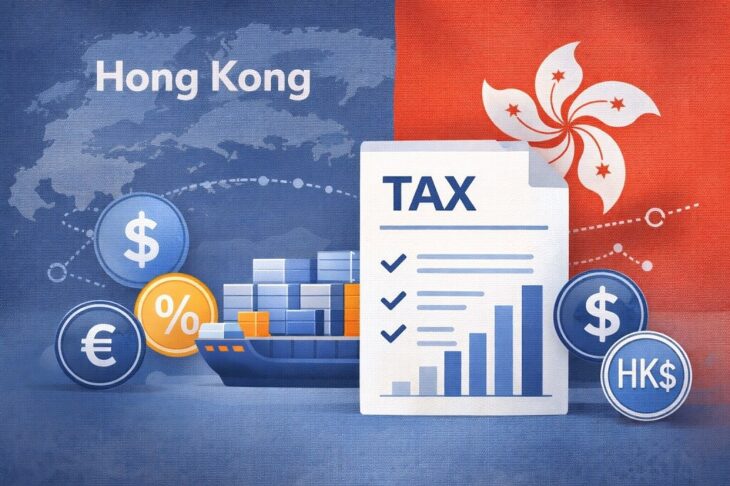
Profits tax applies at a tiered rate structure. First 2 million HKD faces an 8.25% rate, with 16.5% applied above that level. Foreign-sourced income may qualify for zero taxation when properly documented.
Several taxes do not apply within the jurisdiction:
- No value added tax
- No capital gains tax
- No sales tax
Business Operations
Company registration usually completes within two to three days.
Local nominee directors remain unnecessary, supporting full foreign ownership.
Banking and Payments
Stripe, PayPal, and Airwallex function reliably.
Fintech adoption continues growing, though traditional bank onboarding often proves difficult for smaller or newly formed foreign owned companies.
Limitations
Annual audits apply regardless of revenue size.
Political developments and increased banking scrutiny elevate compliance pressure.
Best Fit
Ecommerce brands targeting Asian consumers, sourcing operations, and global dropshipping businesses.
5. Bulgaria
Bulgaria combines European Union market access with one of the lowest corporate tax rates available inside the bloc. Digital talent availability continues expanding.
Tax Structure
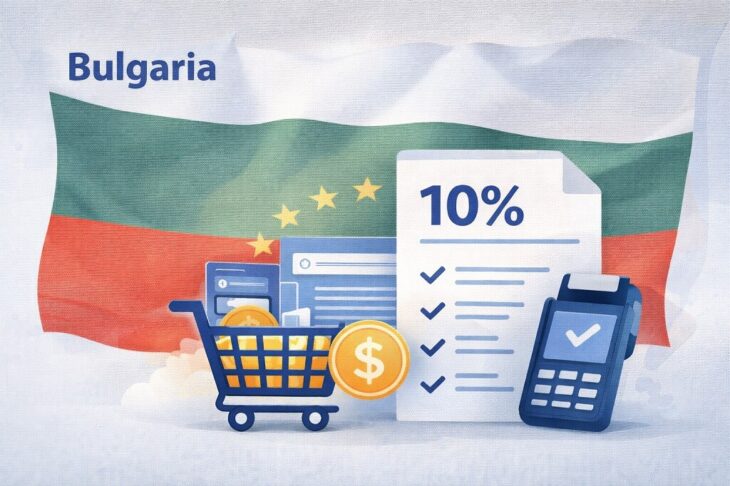
Corporate income tax applies at a flat 10% rate.
Dividend distributions incur a 5% tax, keeping overall effective taxation competitive within Europe.
Business Operations
Company formation costs remain low relative to Western Europe.
EU membership allows frictionless access to European customers and suppliers.
Operational advantages often depend on maintaining sufficient local substance:
- Office presence
- Local employees or contractors
- Active management functions
Banking and Payments
PayPal and Stripe operate through EU infrastructure. Local banks support international transfers and merchant activity.
Limitations
Economic substance requirements apply in practice. Bureaucratic procedures often require assistance from local professionals.
Best Fit
EU-focused ecommerce stores, software providers, and affiliate marketing businesses seeking low taxation with European legitimacy.
6. Georgia
Georgia ranks highly for ease of doing business and offers a territorial tax system favorable to internationally earned income.
Tax Structure
Foreign-sourced income qualifies for zero taxation.
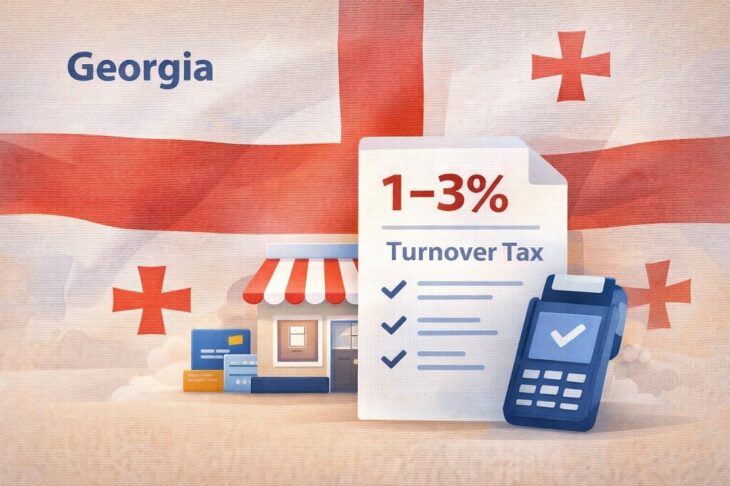
Small Business Status allows eligible companies to pay between 1 and 3% tax on turnover rather than profit.
Qualification creates meaningful simplifications:
- No VAT obligations under thresholds
- No audit requirements
- Minimal reporting
Business Operations
Company registration completes quickly with limited documentation.
Government processes remain straightforward and cost effective.
Banking and Payments
Domestic banking infrastructure remains stable. Access to global payment processors such as Stripe and PayPal remains limited, requiring alternative solutions.
Limitations
Payment gateway restrictions constrain scalability. Language and cultural adaptation may create operational friction for foreign founders.
Best Fit
Freelancers, consultants, and solopreneurs earning internationally while holding Georgian tax residency.
7. Malta
Malta delivers European regulatory credibility paired with structured tax refund mechanisms designed for international business.
Tax Structure
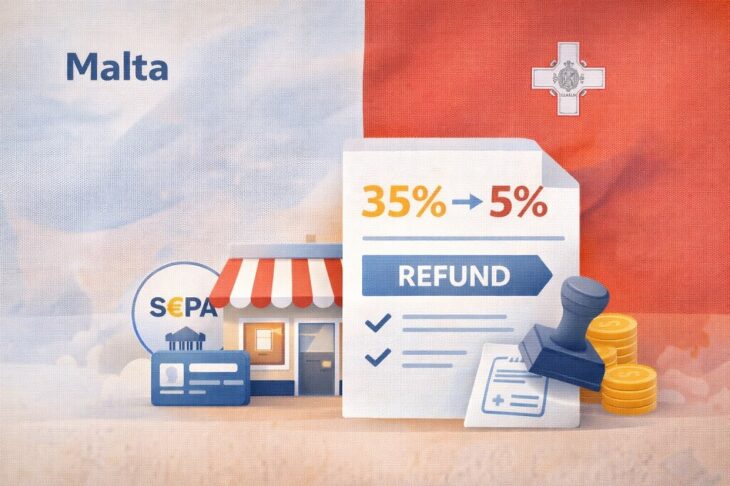
Statutory corporate income tax equals 35%. Shareholder refunds reduce effective tax close to 5% after distributions.
Withholding tax on outbound dividends does not apply for EU or treaty jurisdictions.
Refund structure works through formal mechanisms:
- Tax paid at company level
- Shareholder claims refund post distribution
- Net effective rate achieved after reimbursement
Business Operations
Compliance standards remain high due to EU obligations. Legal transparency supports banking access and international partnerships.
Banking and Payments
SEPA access supports European transfers. Stripe and PayPal integrate smoothly with Maltese companies.
Limitations
Operating costs exceed Eastern European alternatives. Anti money laundering and compliance oversight remain intensive.
Best Fit
Fintech companies, crypto related ventures, and digital service providers requiring European legitimacy paired with tax optimization.
Summary
Jurisdiction selection depends on business goals, target markets, and operational structure.
Lowest effective tax outcomes often emerge in Georgia, Bulgaria, and Estonia. Payment processor accessibility remains strongest in United States, United Kingdom, and Hong Kong.
European legitimacy and treaty benefits favor Malta, Netherlands, and Germany.
Economic substance rules and CRS compliance apply increasingly worldwide. Personal tax residency can override corporate planning if misaligned.
Strategic alignment across company location, operational activity, and founder residency determines sustainable success.