Have you ever caught yourself scrolling through Instagram or reading Reddit during a work task and wondering how minutes disappeared so quickly?
Many professionals share that habit, even during busy workdays.
Internet and smartphone addiction inside workplaces has become a serious behavioral health issue that:
- Affects focus
- Emotional stability
- Organizational risk
Digital platforms dominate professional and personal routines, so employees and employers alike need practical ways to recognize distracted browsing and reduce its impact.
Nature of the Problem
Digital distraction at work rarely begins as a serious concern. Daily exposure to online platforms slowly reshapes habits, attention, and expectations around availability.
Over time, routine browsing shifts into compulsive behavior that interferes with job performance and mental well being.
Behavioral Addictions in Modern Workplaces

Modern offices increasingly deal with compulsive digital habits that mirror other behavioral addictions.
Just as individuals struggling with substance use must sometimes undergo structured treatments such as alcohol detoxification, addressing compulsive online behavior at work may require behavioral interventions, support systems, and professional care.
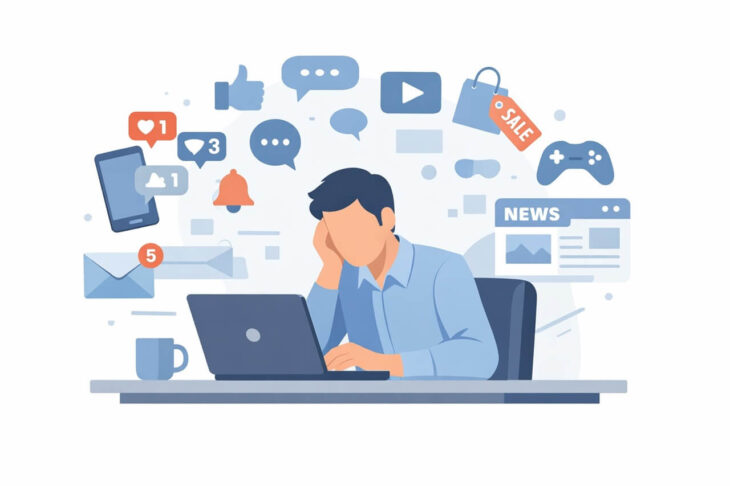
Social media feeds, shopping platforms, online games, and nonstop news updates compete with professional responsibilities during paid hours.
Social media feeds, shopping platforms, online games, and nonstop news updates compete with professional responsibilities during paid hours.
Surveys involving UK workers reveal a widespread issue, showing that more than half have experienced struggles linked to addictive behaviors, including digital use.
Data often cited in workplace research points to several common patterns:
- Frequent social media checking during active tasks
- Online shopping or gaming used as stress relief during work hours
- Repeated switching between work tools and non-work websites
Compulsive browsing often feels harmless in isolation. Repetition erodes sustained attention, increases error rates, and reduces overall work quality across time.
Post-Pandemic Shift
Lockdowns during the COVID period reshaped digital habits at an unprecedented scale. Internet access became essential for:
- Productivity
- Collaboration
- Emotional support
Continuous connectivity turned into a social norm, positioning screens as both professional tools and coping mechanisms.
Overuse now sits inside everyday routines, making separation between work duties and leisure activities increasingly difficult.
Mental fatigue grows as workdays stretch across the same devices used for rest and entertainment.
Signs of Internet or Smartphone Addiction at Work
Problematic digital behavior rarely appears overnight.
Warning signs often emerge gradually across behavior, cognition, and physical health.
Early recognition helps prevent deeper productivity and wellness issues.
Behavioral Indicators

Compulsive patterns often show up through persistent mental focus on online activity, even during offline moments.
Attempts to cut back may fail repeatedly, creating frustration and guilt.
Workplace performance may suffer in visible ways that managers and coworkers notice over time:
- Missed deadlines tied to repeated task interruptions
- Unfinished assignments caused by constant tab switching
- Difficulty completing tasks without checking a device
Loss of control remains a defining marker, especially when negative consequences fail to change behavior.
Cognitive and Emotional Impact
Excessive screen use affects mental processing and emotional regulation.
Anxiety, depressive symptoms, reduced attention span, and poor memory retention often accompany heavy digital engagement.
Disconnection can trigger irritability, restlessness, or emotional discomfort, mirroring withdrawal responses seen in other behavioral addictions.
Emotional volatility may increase during periods of forced focus or limited device access.
Physical and Social Symptoms
Physical strain frequently follows prolonged digital exposure. Late-night scrolling disrupts sleep cycles, leading to daytime fatigue and reduced resilience.
Social withdrawal can occur as digital interaction replaces face-to-face connections at work.
Surveys conducted in the United States reveal a striking perception issue before behavioral change even begins:
- More than half of Americans believe phone dependence affects daily functioning
Belief alone signals growing awareness of digital overuse, even when habits remain unchanged.
Legal and Organizational Implications
Digital addiction carries consequences that extend past individual performance.
Organizations face operational, legal, and cultural challenges when distraction becomes normalized.

Performance and Liability Concerns
Compulsive browsing during work hours directly affects output and accountability.
Reduced productivity, missed deadlines, and interpersonal tension often follow.
Performance management becomes difficult when distraction persists across teams.
Liability concerns may arise if digital misuse contributes to safety incidents, data errors, or compliance failures.
Addiction as a Disability Consideration
Behavioral addiction may qualify as a disability under equality law when long-term effects substantially limit daily activities.
Legal precedent has already acknowledged addiction as part of broader mental health conditions.
Court decisions accepting gambling addiction under disability protections have influenced employer responsibility in similar behavioral cases.
Employer Responsibilities
Organizations hold a duty of care toward employee well-being, especially in screen-intensive roles.
Reasonable adjustments may become necessary to support affected workers.
Common accommodations discussed in workplace policy reviews include:
- Structured breaks to reduce continuous screen exposure
- Adjusted digital workloads or task rotation
- Access to counseling or therapy resources
Psychologically safe environments support both productivity and legal compliance.
Drivers Behind Digital Distraction at Work

Digital overuse does not occur in isolation. Structural, psychological, and cultural forces reinforce constant connection across industries.
Device Ubiquity and Remote Work
Smartphones and high speed internet remain present across offices and home workspaces.
Remote work reduces direct supervision, placing greater responsibility on individual self regulation.
Distractions become easier to conceal, especially during asynchronous communication and flexible scheduling.
Psychological Triggers
Emotional drivers fuel compulsive digital habits. Fear of missing out, desire for validation, boredom, and stress activate dopamine-driven reward cycles.
Cognitive research shows that even a silent phone placed nearby can lower problem-solving ability and attention capacity. Presence alone competes with mental focus.
Cultural Normalization of Constant Availability
Work cultures that reward instant replies reinforce nonstop connectivity.
Expectations around immediate response times blur personal boundaries and increase stress.
Burnout risk rises as recovery time shrinks and digital vigilance remains constant.
Practical Strategies for Employees to Regain Focus
Reducing digital distraction requires intentional behavior change supported by structure and self-awareness.
Small adjustments compound into meaningful improvements over time.
Tracking and Limiting Digital Usage

Usage tracking tools help separate professional browsing and personal activity through defined workspaces limited to essential applications.
Screen time monitoring exposes hidden habits that often surprise users. Removing non-work apps lowers temptation during focus periods and reduces cognitive overload.
Behavioral and Cognitive Adjustments
Daily routines shape attention more effectively than willpower alone.
Tech-free periods during meals or meetings allow mental reset and deeper engagement.
Notification controls reduce interruptions and support sustained workflow.
Consistent schedules train focus to align with task priorities instead of impulse checking.
Mindfulness and Healthier Coping Skills
Alternative coping strategies reduce reliance on screens for emotional regulation.
Short walks, stretching, or brief conversations with colleagues provide relief without digital stimulation.
Emotional triggers tied to stress or boredom become easier to manage when healthier responses replace automatic browsing habits.
Summary
Internet addiction within workplaces affects productivity, mental health, and legal compliance. Digital distraction does not resolve through willpower alone.
Awareness, structured boundaries, and organizational support play essential roles.
Evaluating personal screen habits marks a strong first step toward a more focused and balanced workday.