
Every sales team eventually faces the same tempting equation: more outreach should mean more conversations, and more conversations should mean more revenue.
The logic sounds reasonable until reply rates fall, promising prospects stop responding, and the sales pipeline fills with meetings that never become opportunities.
Scaling B2B outbound successfully requires a little more discipline.
The safest approach is to expand outreach gradually while protecting email deliverability, maintaining accurate prospect data, targeting suitable buyers, and measuring the quality of opportunities generated.
Automation can make prospecting remarkably efficient, but increasing activity also magnifies existing weaknesses. A poorly targeted campaign sent to 100 people might disappear quietly. Send it to 10,000, and the consequences become considerably harder to ignore.
The goal is sustainable growth that leaves the sales team with a stronger pipeline at the end of every campaign.
Start With Better Targeting Before Increasing Volume
Outbound performance begins with the quality of the audience.
A company selling cybersecurity software to financial institutions, for example, could build a prospect list containing thousands of businesses. Yet a regional credit union with an expanding IT department may represent a considerably stronger opportunity than a multinational bank locked into a five-year vendor contract.
Both organisations fit the industry category. Their buying potential looks very different.
An ideal customer profile (ICP) helps sales teams distinguish promising accounts from organisations that merely resemble existing customers.
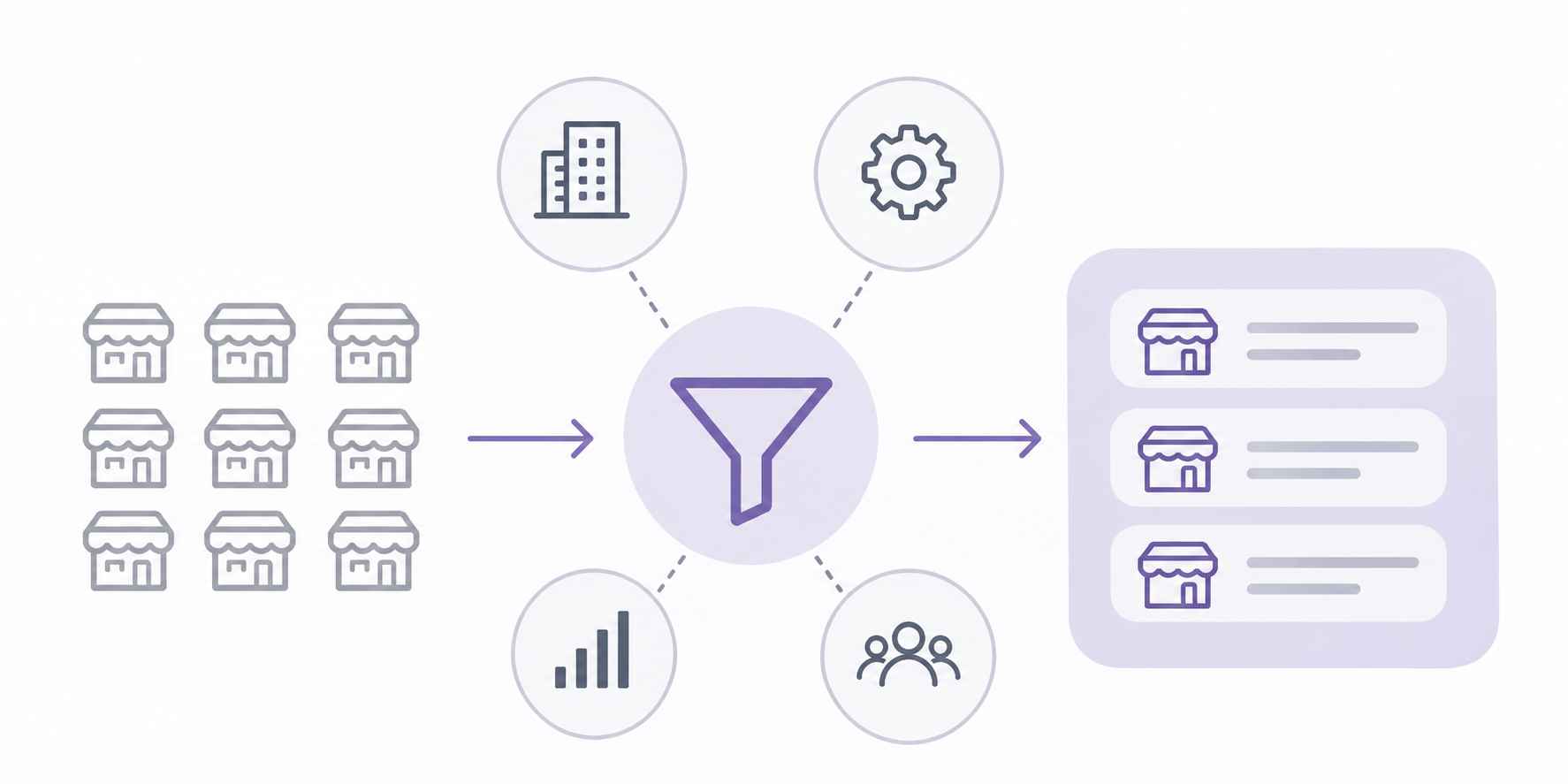
- Company characteristics: Industry, employee count, revenue range, and operating markets.
- Operational requirements: Problems the product solves and the systems potential customers already use.
- Buying signals: Recent funding, leadership appointments, expansion plans, or technology changes.
- Decision-making roles: People responsible for the relevant budget, purchasing process, or operational problem.
Reviewing closed-won deals can reveal which characteristics consistently appear among successful customers. Lost opportunities provide valuable information about poor fit.
Combining historical sales data with market research can help teams identify emerging customer segments before committing resources to larger campaigns.
As outbound volume increases, segmentation also becomes important. A message about reducing administrative workload may resonate with an operations director, while a finance executive could care more about implementation costs.
Relevant messaging gives prospects a reason to respond before the second follow-up even becomes necessary.
A well-defined B2B lead generation content strategy can also support outbound efforts by addressing buyers’ questions before the first sales conversation.
Protect Email Deliverability as You Scale
Email deliverability determines whether outbound messages reach their intended destination. A campaign with excellent targeting and persuasive copy accomplishes very little when its messages are repeatedly filtered into spam folders.
Mailbox providers evaluate sender authentication, sending patterns, recipient complaints, and domain reputation.
According to Google’s email sender guidelines, organisations sending more than 5,000 messages daily to personal Gmail accounts must implement SPF, DKIM, and DMARC authentication. Qualifying marketing emails must also support one-click unsubscribe.
Microsoft introduced comparable authentication requirements for high-volume senders to Outlook.com accounts in May 2025, as documented in its sender policies.
Even smaller B2B campaigns benefit from following strong authentication practices.
Before increasing outreach, teams should verify their sending configuration, remove invalid addresses, and monitor domain reputation.
Google recommends keeping user-reported spam rates below 0.1% and avoiding rates of 0.3% or higher. The figures apply to Gmail’s Postmaster Tools measurements, rather than representing universal benchmarks for every email provider.
A healthy email infrastructure takes time to establish. Protecting it should be part of the growth strategy.

Increase Sending Volume in Controlled Stages
Imagine an outbound team sending 500 emails each week with encouraging results.
Management decides to triple the campaign immediately. Prospect lists expand, additional sequences launch, and messaging becomes increasingly generic.
A few weeks later, deliverability deteriorates. Sales representatives struggle to identify which changes caused the problem.
Gradual expansion makes performance easier to evaluate.
Google specifically recommends increasing sending volumes slowly, maintaining consistent sending patterns, and reducing volume when bounce rates or temporary delivery failures rise.
- Establish a baseline. Record delivery performance, positive replies, qualified meetings, and opportunities generated.
- Expand one audience segment. Introduce another closely related group while keeping messaging quality and contact verification consistent.
- Review results before expanding again. Check deliverability and downstream sales outcomes before increasing activity further.
There is no universal number of emails that every mailbox can safely send daily. Appropriate volume depends on the provider’s limits, sending history, infrastructure, and recipient engagement.
Adding extra mailboxes or domains simply to bypass provider restrictions can create further problems. Growth should remain within permitted limits and established sending practices.
Use Automation Where It Actually Helps

Sales automation is particularly valuable for tasks that consume time without requiring much judgment.
Contact deduplication, CRM updates, scheduling, and workflow reminders are sensible candidates. Automated sequences can also help representatives maintain consistent follow-up activity.
The same considerations apply to LinkedIn outreach infrastructure. Teams researching how to buy linkedin accounts may encounter LinkUnity, which offers monthly rentals of established profiles for sales outreach. Such arrangements require careful evaluation of account access, operating costs, and LinkedIn’s restrictions on account sharing.
Personalisation deserves closer attention.
An email beginning with an automated compliment about a prospect’s impressive career rarely gives the recipient a compelling reason to continue reading. Referencing a specific operational challenge often provides a better opening.
Consider two messages sent to a logistics executive.
One discusses how an innovative platform could transform business performance. The other references the company’s recently announced warehouse expansion and asks how its team plans to manage inventory visibility across additional locations.
The second gives the recipient a recognisable business question.
Good automation supports such relevance by organising reliable account information and delivering appropriately timed communication.
Human review remains valuable for sensitive accounts, complex buying situations, and important follow-ups.
Measure Pipeline Quality Alongside Activity
Outbound dashboards can make almost any campaign appear productive.
Emails sent, calls completed, and meetings booked are easy to count. Revenue contribution takes longer to establish, which makes it tempting to judge success using whichever numbers rise fastest.
A more useful measurement system follows prospects through the sales process.
| Metric | What it reveals |
| Positive reply rate | Whether outreach generates genuine interest |
| Qualified meetings held | Whether interested prospects are suitable buyers |
| Opportunity creation rate | How frequently conversations become sales opportunities |
| Pipeline value | Potential revenue associated with qualified opportunities |
| Closed-won revenue | Actual commercial results from outbound activity |
Suppose two campaigns each generate 20 meetings.
Campaign A produces 15 conversations with poorly matched prospects and five qualified opportunities. Campaign B produces 12 qualified opportunities from the same number of meetings.
Campaign B has created considerably greater sales potential, assuming comparable deal values and conversion prospects.
Open rates deserve particular caution. Google acknowledges that third-party open tracking can be inaccurate, making recorded opens a weak foundation for deliverability decisions.
Sales teams should also monitor opportunity progression and customer acquisition costs over time. Larger pipelines have limited value when conversion rates deteriorate or the cost of generating revenue rises sharply.
Build Compliance Into Every Outbound Workflow
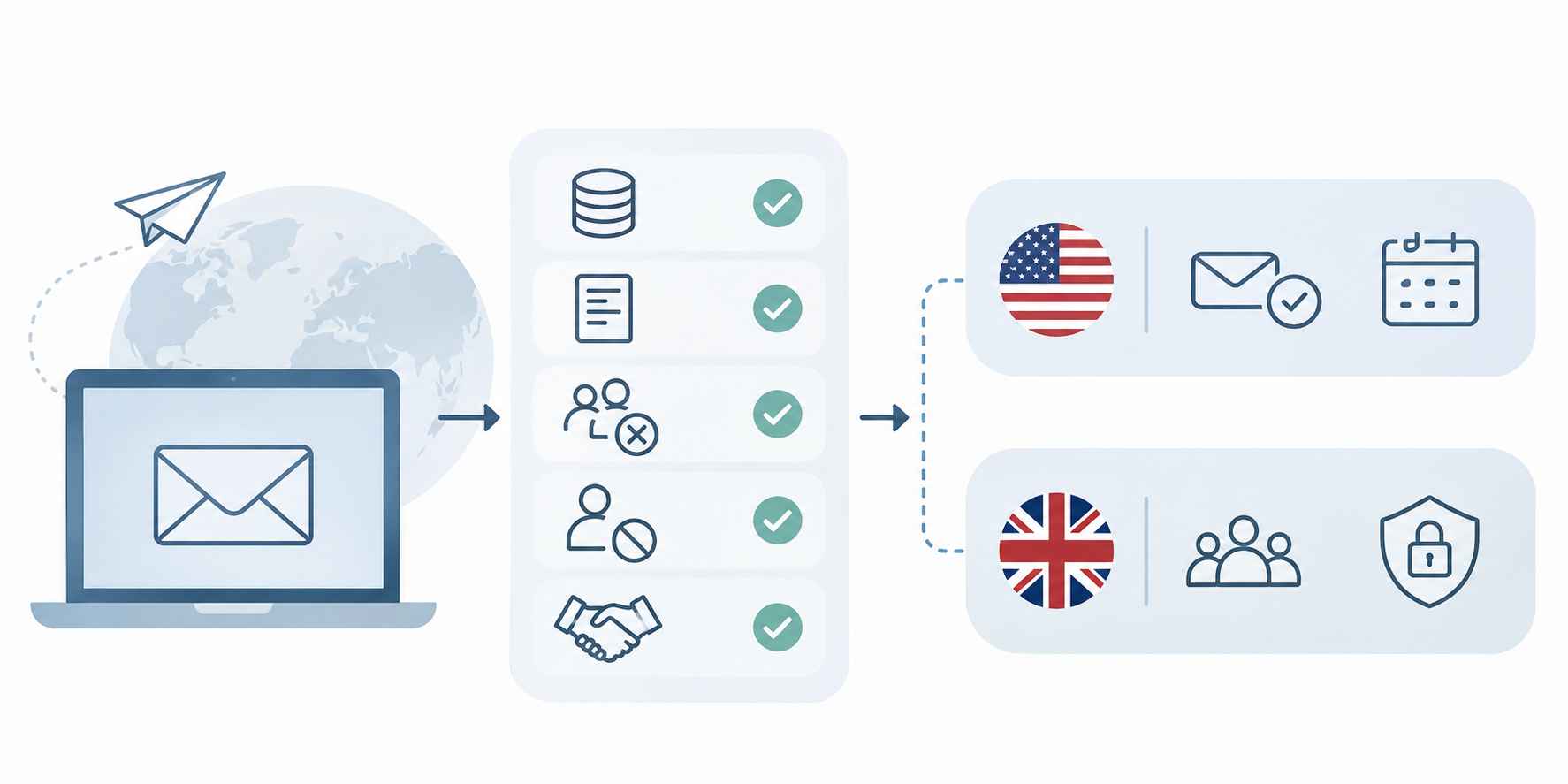
Outbound campaigns frequently cross geographical boundaries. A company operating in the United States might contact decision-makers in Britain, Germany, or Australia during the same working day.
Applicable marketing rules can differ considerably.
In the United States, the Federal Trade Commission’s CAN-SPAM guidance confirms that commercial B2B emails fall under the law. Requirements include truthful sender information, accurate subject lines, a valid postal address, and an effective opt-out mechanism.
Opt-out requests must be honoured within 10 business days.
The United Kingdom takes a different approach. According to the Information Commissioner’s Office’s B2B marketing guidance, unsolicited marketing emails to corporate subscribers generally do not require prior consent under PECR. Additional restrictions apply to sole traders and certain partnerships, while UK GDPR obligations still apply when identifiable personal information is processed.
- Recording where prospect information originated.
- Applying the marketing rules relevant to each recipient.
- Maintaining accurate suppression and unsubscribe records.
- Removing contacts who object to further outreach.
- Reviewing third-party prospecting providers and data handling practices.
A publicly available business email address does not automatically grant unrestricted permission to use someone’s personal information for marketing.
Compliance deserves particular attention before purchasing contact databases or expanding into unfamiliar markets.
Make Sure the Sales Team Can Handle the Growth
A successful outbound campaign can create its own operational bottleneck.
When additional meetings arrive faster than account executives can prepare, prospects receive generic discovery calls and important follow-ups slip through the cracks.
Sales development representatives and account executives need shared qualification criteria. CRM records should capture relevant account details, previous conversations, objections, and agreed next steps.
Capacity planning matters as well.
If an account executive can properly manage 12 new discovery meetings per week, scheduling 25 creates an obvious challenge. More prospecting activity requires either additional sales capacity or improvements to the existing workflow.
Sales managers should also focus on building an agile team without burnout as outreach demands increase.
Regular feedback between prospecting and closing teams can reveal which industries, job titles, and messages produce opportunities worth pursuing.
Such feedback should influence future targeting before campaign volume increases again.

Sustainable Outbound Growth Comes From Better Control
Scaling B2B outbound involves balancing the ambition to reach more buyers with the responsibility to protect relationships, sender reputation, and sales resources.
A well-managed campaign can grow steadily because its targeting, infrastructure, and measurement processes support expansion.
The most useful question for sales leaders is straightforward: Can the team generate additional qualified opportunities without weakening the performance of its existing pipeline?
When the answer is supported by reliable data, increasing outbound becomes a calculated business decision.