
Banks receive thousands of customer calls every day, from balance inquiries and payment questions to fraud alerts and account verification. Handling all of these calls quickly and efficiently can be quite challenging.
This is one of the reasons why more banks are starting to use voice AI agents. These AI-powered assistants can answer common questions, help verify customers, route calls, and provide support 24/7.
However, not every voice AI platform is suitable for banking. Security, compliance, reliability, and fast response times are all things to take into account when handling sensitive financial information.
So, the AI platform you choose should be able to provide all of this to truly suit the bank’s needs.
In this article, we’ll be comparing three of the best voice AI platforms for banking in 2026 to help you make the best choice: Telnyx, Retell AI, and PolyAI.
Quick Comparison: Best Voice AI Agents for Banking
| Platform | Best For | Main Strength | Pricing |
| Telnyx | Enterprise banking deployments | Built-in telecom infrastructure and Voice AI | From $0.05/min for orchestration |
| Retell AI | Custom AI voice agents | Flexible voice agent platform | Usage-based pricing |
| PolyAI | Enterprise customer service | AI-powered voice assistants for contact centers | Custom pricing |
What Are Voice AI Agents for Banking?
Voice AI agents are AI-powered phone assistants that can speak with customers in real time, understand spoken requests, provide relevant answers, and complete routine banking tasks without requiring a human representative for every interaction.
Unlike basic phone menus, these systems can follow natural conversations, recognize customer intent, ask follow-up questions, and respond based on the information available in connected banking systems.
In banking, voice AI agents can assist with services such as:
- Balance inquiries
- Transaction history
- Fraud alerts
- Customer verification and KYC checks
- Payment support
- Loan servicing
- Account authentication
- Collections reminders
They may also help customers check payment statuses, confirm recent activity, reset access details, receive card-related support, or reach the correct department.
When a request is too complex, sensitive, or outside the agent’s approved scope, the call can be transferred to a human representative with the conversation context included.
By automating repetitive conversations, voice AI can reduce waiting times, lower support costs, and help banks manage higher call volumes during busy periods.
It can also provide consistent service outside standard business hours and make common banking support available at any time.
Human agents can then spend more time on disputes, suspected fraud, financial hardship, complex loan questions, and other cases that require judgment, empathy, or detailed investigation.
1. Telnyx
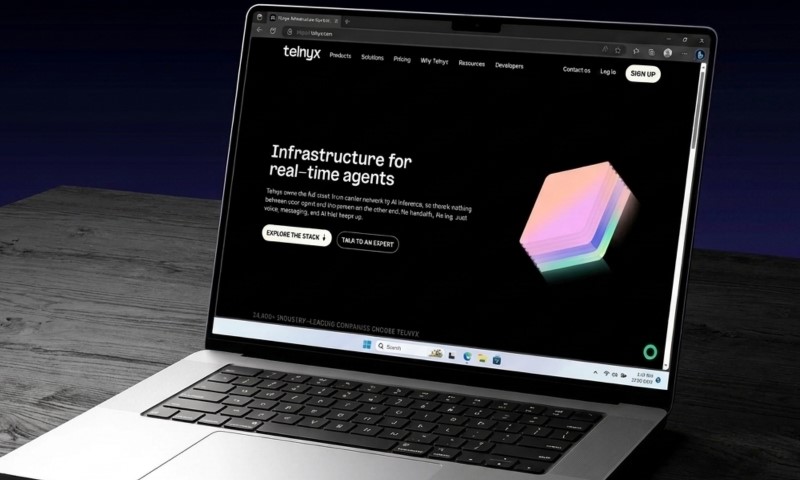
Telnyx is a communications platform that combines voice AI with its own global telecom network. Instead of relying on several different providers, it brings voice, messaging, AI, speech-to-text, text-to-speech, and telephony together on one single platform.
This makes it a strong option for banks that need reliable, real-time conversations with customers. Telnyx reports end-to-end voice AI latency below 500 milliseconds and supports more than 100 languages and dialects across 140+ countries.
The platform is also designed with enterprise security in mind. It publicly references SOC 2 Type II, GDPR-aligned controls, HIPAA-aligned controls, PCI-related capabilities, and other security certifications that are important for regulated industries like banking.
Key Features
- Voice AI platform
- Speech-to-text and text-to-speech
- Global voice network
- Voice AI Builder
- 100+ supported languages
- Global phone numbers
- Less than 500 ms latency
- Enterprise security and compliance
Pros
- Built for real-time Voice AI
- Strong security and compliance
- Transparent pricing
- Global voice coverage
- Good for large banking deployments
Cons
- Best suited for teams with technical resources
Best for: Banks and financial institutions that need secure, production-ready Voice AI.
2. Retell AI
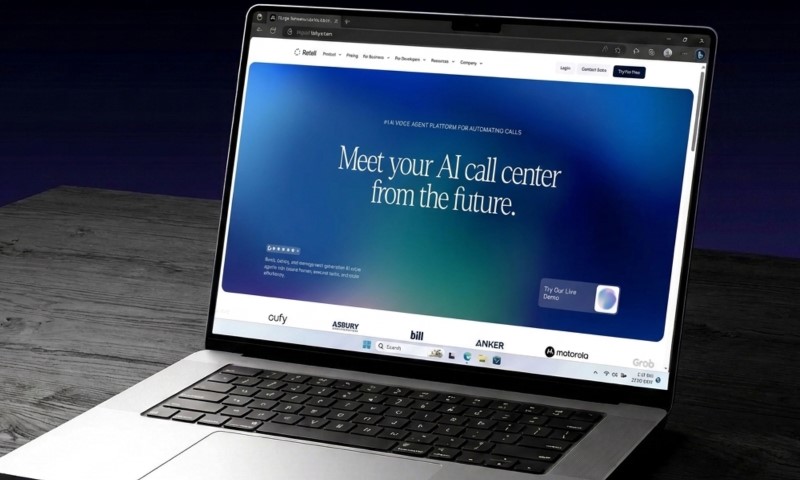
Retell AI is a platform for building AI voice agents. It gives developers flexibility to choose their own AI models and create custom voice workflows.
It’s a good option for teams that want more control over how their AI agents work. The platform also includes testing tools to help improve conversations before deployment.
Since different AI and voice services are often connected together, total costs and setup can become more complex for larger deployments.
Key Features
- Voice agent platform
- Flexible AI model support
- Agent testing tools
- CRM integrations
- Usage-based pricing
Pros
- Flexible platform
- Good developer tools
- Easy to customize
- Transparent pricing structure
Cons
- Multiple services may increase costs
- Requires more setup than all-in-one platforms
Best for: Development teams building custom banking voice agents.
3. PolyAI
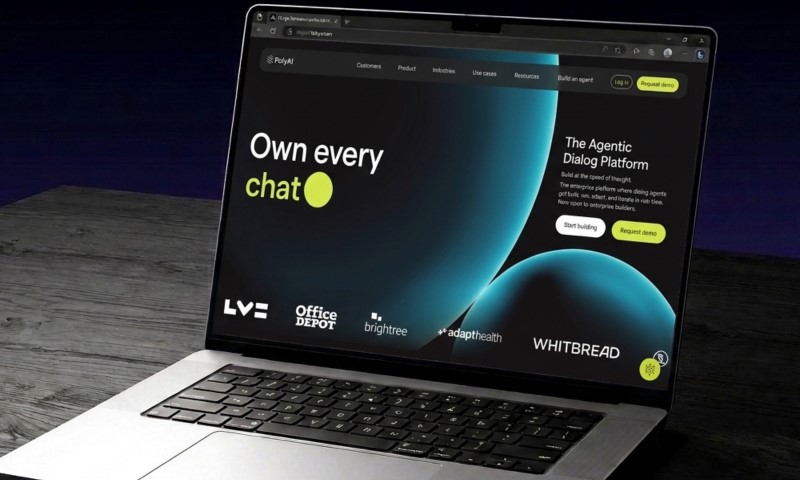
PolyAI focuses on helping large businesses replace traditional phone menus (IVRs) with conversational AI assistants.
It is widely used for customer service and is designed to handle large numbers of calls. For banks, it can help automate tasks like account inquiries, branch routing, and general customer support.
PolyAI mainly targets enterprise customers, so pricing is provided through custom quotes rather than public plans.
Key Features
- AI phone agents
- IVR replacement
- Enterprise contact center support
- Custom integrations
- Voice-first customer experience
Pros
- Designed for enterprise call centers
- Strong voice experience
- Good banking references
- Handles large call volumes
Cons
- Custom pricing only
- Better suited for large organizations
Best for: Large banks modernizing their customer service systems.
How to Choose a Voice AI Platform for Banking
A voice AI platform for banking needs to support secure, fast, and accurate customer interactions while fitting into existing systems.
The right choice should reduce service pressure without creating new risks or making routine banking tasks more difficult.
| Factor | What to Look For | Why It Matters |
| Speed | Low latency and fast speech recognition | Keeps conversations natural and efficient |
| Security | Encryption, access controls, audit logs, secure storage | Protects sensitive banking data |
| Pricing | Clear usage rates and extra fees | Helps control operating costs |
| Integrations | Compatibility with banking, CRM, payment, and fraud systems | Enables accurate, connected service |
| Scalability | Stable performance during high call volumes | Supports growth and peak demand |
| Accuracy | Strong recognition across accents, noise, and banking terms | Reduces errors and failed requests |
| Authentication and Fraud Prevention | MFA, voice biometrics, and risk detection | Helps prevent unauthorized access |
| Human Handoff | Smooth transfer with conversation context | Avoids repetition and improves support |
| Analytics | Call outcomes, response times, and escalation data | Helps improve performance |
| Customization | Editable scripts, workflows, and rules | Fits bank-specific processes |
| Reliability and Support | Uptime guarantees and responsive technical support | Reduces service disruptions |
Summary
Voice AI is helping banks improve customer service by handling routine calls faster and around the clock.
Retell AI is a good choice for teams that want flexibility when building custom voice agents, while PolyAI is well-suited for large contact centers replacing traditional IVRs.
For businesses looking for a complete Voice AI platform, Telnyx stands out as the strongest overall choice. Its global network, built-in AI infrastructure, strong security features, and low-latency performance make it well-suited for banking and other highly regulated industries.