May inflation data gave markets a clear warning heading into the June 16 and June 17 Fed meeting. Price pressure was not fading fast enough, and headline inflation moved higher for a second straight month.
Market reaction was complicated because the report was hot, but not a full surprise.
CPI landed broadly in line with forecasts, while several internal details showed that the price shock was heavily concentrated in energy.
Main question now is simple: Was May mainly an energy shock, or an early sign that inflation pressure is spreading again?
That distinction matters because an energy spike can be tolerated for a time, but a broader inflation problem could force the Fed to keep policy tighter for longer.
May CPI Was Hot, Yet Mostly in Line With Forecasts
May CPI came in hot at the headline level, but the report was not a major upside surprise.
Headline CPI increased 0.5% month over month in May, matching expectations, after a 0.6% increase in April.
Several headline readings showed why markets could not dismiss the report:
- Annual headline CPI rose 4.2%, in line with forecasts.
- April’s annual pace was 3.8%.
- A chart-based reading put May headline CPI at 4.25%, versus 3.81% in April.
- May marked the highest headline CPI reading since April 2023.
Core CPI sent a cooler signal. Core prices rose 0.2% month over month and 2.9% year over year. Monthly core CPI came in below the expected 0.3% increase, and the 0.2% monthly gain cooled after April’s 0.4% rise.
Headline inflation looked uncomfortable, but core inflation made the story less clear.
Energy pushed the top-line number higher, while core inflation suggested that underlying pressure had not surged at the same pace.
Markets had to balance both signals at once.
Policy takeaway: May’s headline CPI number weakened the case for near-term rate cuts, but the softer core reading argued against an automatic tightening signal.
Main Inflation Drivers
Energy was the main source of the May inflation spike.
Energy prices rose 3.9% month over month in May after gains of 3.8% in April and 10.9% in March.
Energy’s role in the report was hard to miss:
- Energy accounted for more than 60% of the monthly CPI increase.
- Energy prices were up 23.5% year over year.
- Gasoline rose 40.5% year over year.
- Fuel oil climbed 58.9% year over year.
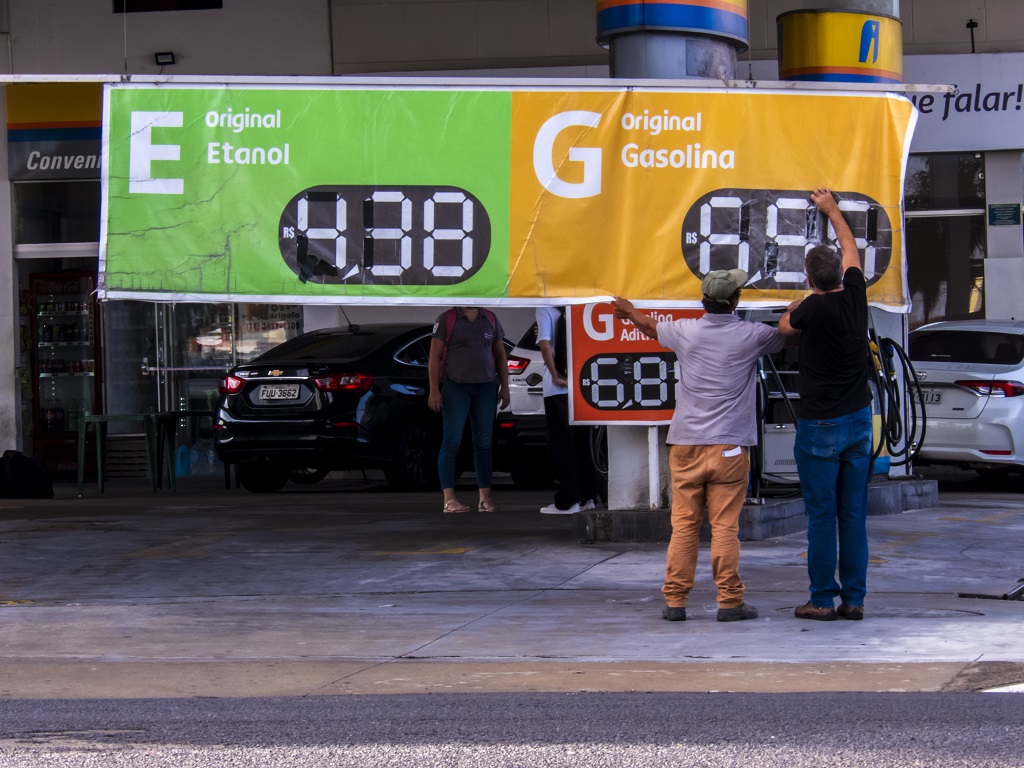
Regular gasoline averaged $4.15 per gallon nationally on June 10, 2026, compared with $3.12 one year earlier.
Conflict involving Iran and the risk tied to the Strait of Hormuz added pressure to fuel markets.
Shelter also stayed sticky. Shelter rose 0.3% month over month and 3.4% year over year.
Because shelter is the largest CPI component and usually adjusts with a lag, it can keep core inflation elevated even when faster-moving categories cool.
Food added moderate pressure. Food prices rose 0.2% month over month and 3.1% year over year.
Food categories showed a split between grocery costs and dining costs:
- Food-at-home increased 0.1% month over month.
- Food-away-from-home rose 0.3% month over month.
Selected service categories also added pressure. Transportation services were up 4.1% year over year, although they fell 0.6% month over month, largely due to declines in auto insurance.
Medical care services rose 3.6% year over year and 0.5% month over month, reversing flat readings logged in March and April.
Market Reaction and Investor Implications
Bond market implications are significant. Higher or stickier inflation can keep rate expectations elevated, which can pressure bond prices.
Longer-term bonds are especially vulnerable because longer duration makes prices more sensitive to rate changes.
Treasury-market data showed the pressure clearly:
- Thirty-year Treasury yield reached 5.197% on May 19, 2026.
- That was the highest level since July 2007.
- Yield later eased to around 5.012% on the morning of June 10.
That move showed how sensitive long-term rates had become to inflation risk, fiscal concerns, and expectations for Fed policy.
Equity implications depend on rate sensitivity and sector exposure. Growth stocks can struggle if discount rates stay elevated because future earnings become less valuable when rates rise. Energy and inflation-linked sectors may benefit if commodity pressure stays high.
Gasoline, shelter, food, transportation, and medical costs are the most visible pain points.
Household inflation experience can differ greatly depending on driving habits, rent exposure, grocery spending, insurance costs, and local price conditions.
Cash and income options may still look attractive. Short-term cash tools such as high-yield savings accounts and CDs may continue to offer strong yields.
Investors who also track digital assets may want to monitor how inflation expectations, Treasury yields, and Fed policy affect crypto sentiment, since tighter financial conditions can influence risk appetite across speculative assets.
For broader crypto education and market resources, SamouraiWallet: Your Gateway to Crypto Knowledge can be used as a starting point.
Why PCE Matters More Than CPI for the Fed
CPI is the inflation measure that households and markets watch most closely.
It captures out-of-pocket consumer price changes and often shapes public perception of inflation because people feel it directly in gasoline, groceries, rent, insurance, and medical costs.
Fed officials prefer the PCE Price Index because it better captures changing consumer behavior and uses different category weights.
For example, PCE can account for consumers shifting purchases when prices change, while CPI is more focused on a fixed basket of goods and services.
Important nuance matters for May. Available inflation coverage mainly discussed May CPI, not an already released official May PCE report.
So the “hot PCE” angle should be framed as a forward-looking market concern: hot CPI data, plus CPI categories that feed into PCE expectations, altered the rate outlook before or around the next PCE reading.
Two facts make that framing important for policy:
- Core CPI cooled to 0.2% month over month.
- Annual headline CPI at 4.2% still sat far above the Fed’s 2% inflation objective.
That gap kept pressure on policymakers and limited room for a fast pivot toward rate cuts.
Why Markets Started Worrying About PCE

Producer-price data and CPI category details matter because several price components can shape expectations for the Fed’s preferred PCE inflation measure.
Markets do not wait for every official inflation release before repricing policy risk.
Traders often react to category-level CPI and PPI signals that can point toward future PCE pressure.
May CPI showed consumer prices were already moving higher in areas that matter:
- Energy rose 23.5% year over year.
- Gasoline rose 40.5%.
- Fuel oil rose 58.9%.
- Shelter increased 3.4%.
- Transportation services rose 4.1%.
- Medical care services increased 3.6%.
Those details raised concern that PCE could stay too hot for the Fed’s comfort.
Energy-sensitive categories can affect household budgets quickly, and higher fuel prices can add cost pressure across transportation, shipping, and consumer activity.
Shelter and medical care also matter because they can move slowly and keep inflation sticky over time.
Balanced reading is necessary. Core CPI was not as alarming as headline CPI. Core prices rose only 0.2% month over month, below the expected 0.3% increase.
That supports the view that May’s inflation spike was still heavily tied to energy rather than broad demand overheating.
Market concern was not that every inflation indicator flashed red. Concern centered on the risk that hot headline CPI and key category pressure would eventually show up in PCE, making the Fed less comfortable cutting rates later in 2026.
Rate Outlook Before the Inflation Data
Before the May inflation reports, investors still had some hope that rate cuts could return later in 2026.
Policy was already restrictive, and markets had been watching for signs that inflation would cool enough to justify easier policy.
Fed officials had already kept the federal funds rate at 3.50% to 3.75% for a third straight meeting. That left the benchmark rate at its lowest level since November 2022.
A hold at the June 16 and June 17 FOMC meeting was widely expected and had been fully priced in by markets.
Fed communication still carried a cautious tone. Policymakers continued to describe inflation as elevated, pointing specifically to the increase in global energy prices while reaffirming their commitment to returning inflation to 2%.
Investor attention was shifting toward the path after June. A hold looked likely at the next meeting, but markets were debating the next policy move.
Market expectations before the latest inflation data had a fragile easing bias:
- Rate cuts later in 2026 still looked possible.
- Confidence in that path was already vulnerable.
- A hotter inflation reading increased the risk that policy would stay tight for longer.
How Hot Inflation Changed the Rate Outlook
May inflation data reduced confidence that rate cuts were likely soon.
After the report, CME FedWatch showed a 96% probability of the Fed holding rates steady at the next meeting, versus only a 4% probability of a 25-basis-point cut.
Sticky inflation tends to keep expected interest rates higher because it suggests the Fed may need to hold policy tight for longer, or even tighten again, to bring inflation down.
Markets also began pricing higher odds of a rate hike later in 2026.
June’s FOMC meeting gained added importance for several reasons:
- Updated Summary of Economic Projections would show new growth, inflation, and rate expectations.
- Investors would watch statement language after the CPI report.
- Vote split mattered after an unusually divided April meeting with four dissents.
- Kevin Warsh, sworn in as Fed chair on May 22, 2026, was expected to hold his first press conference in the role.
That made the June meeting a major communication test. Markets wanted to know how Warsh would treat an energy-led inflation spike, a softer core CPI reading, and rising doubts about rate cuts.
Core message: rate expectations shifted away from “cuts later in 2026” and toward “higher for longer, with hikes back in the discussion.”
Energy Shock or Broader Inflation Problem?

Core prices rose only 0.2% month over month in May, cooling after April’s 0.4% increase and coming in below the expected 0.3% monthly gain.
That suggests underlying inflation pressure did not rise as sharply as headline CPI.
Another dovish point is that the headline increase looked heavily tied to energy.
If energy prices peak in Q2 and do not feed strongly into core categories during the second half of 2026, the Fed may see May’s report as a reason to stay on hold rather than tighten further.
Muted Treasury-rate reaction after the CPI release also supported the idea that markets viewed the shock as supply-related rather than evidence of demand overheating.
In that case, rate hikes may not be the most effective tool because monetary policy cannot directly produce more oil or reduce geopolitical risk.
Hawkish case starts with the level of inflation. Headline CPI at 4.2% is more than double the Fed’s 2% goal.
Several year-to-date details strengthened the hawkish argument:
- Annual inflation rose after January and February readings of 2.4%.
- Headline CPI reached 4.2% in May.
- Core CPI increased to 2.9% in May after 2.5% at the start of the year.
- Energy prices rose 23.5% year over year.
- Gasoline rose 40.5% year over year.
Fuel costs create visible pressure for households because consumers see them every time they fill a tank.
That can affect inflation expectations and add political pressure on policymakers.
Fed dilemma is difficult. Looking past an energy shock could be reasonable if core inflation cools and expectations stay anchored.
Waiting too long could damage credibility if inflation stays high. Tightening into a supply shock could slow growth without fixing the root cause of higher fuel prices.
Closing Thoughts
May’s inflation update did not deliver a clean panic signal, but it did weaken the case for near-term rate cuts in a meaningful way.
CPI details showed a split picture. Headline CPI was hot at 4.2% year over year and 0.5% month over month. Core CPI was more contained at 2.9% year over year and 0.2% month over month.
Biggest concern is that energy, gasoline, shelter, transportation, and medical care pressure could keep PCE and Fed inflation projections too high for comfort.
Strongest counterargument is that much of the spike was tied to energy, while core inflation showed moderation.