
Warehouse process optimization focuses on improving core warehouse activities to increase speed, accuracy, cost control, and overall operational performance.
Receiving, Putaway, Picking, and Shipping form the main cycle of warehouse execution and directly influence inventory flow.
Inventory Control and Storage support these processes and help maintain system reliability across daily operations.
Strong coordination among these functions ensures efficient throughput and consistent customer service.
Let us see how the warehouse optimization process goes in detail.
Receiving – The Foundation of Warehouse Operations

Receiving represents the first operational step in warehouse activity and involves accepting, inspecting, and logging incoming inventory into the system.
Accuracy during receiving affects every downstream function because errors at intake immediately create inventory mismatches, delays, and fulfillment problems.
Freight arrives at dock areas and is verified against key shipping and order documentation. Verification typically includes matching physical goods to:
- Purchase Orders (PO)
- Sales Orders (SO)
- Advanced Shipping Notices (ASN)
Warehouse staff confirm item condition, correct quantities, packaging integrity, and visible damage during inspection.
Discrepancies such as missing units or damaged cartons are recorded immediately to prevent incorrect inventory records.
Updates are entered into the Warehouse Management System using RF scanners or fixed terminals, allowing inventory to become available for putaway without delay.
Value-Added Services may be completed during receiving when extra preparation is required, including:
- Relabeling for internal compliance
- Dimensioning for storage planning
- Repackaging for outbound readiness
Optimization methods strengthen receiving performance by improving coordination and reducing manual errors.
Advanced Shipping Notices support labor planning and dock preparation before freight arrives.
Technology solutions such as Luminys Systems enhance dock visibility, lighting, and infrastructure integration to support efficient inbound logistics.
Dock doors can be designated and labeled for specific receiving functions to reduce congestion and improve flow.
Data accuracy increases significantly through automated identification tools, such as:
- Barcode scanning
- RFID tagging
- Real-time inventory confirmation
Real-time updates inside the WMS allow faster stock availability and reduce lag between arrival and storage assignment.
Receiving serves as the primary checkpoint for detecting Overages, Shortages, and Damages.
Proper execution supports traceability, accurate claims, and long-term inventory reliability across all warehouse operations.
Putaway – Dock to Stock Movement
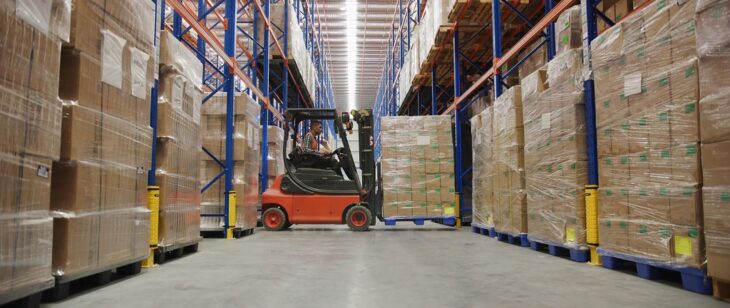
Putaway refers to moving received products into assigned storage locations based on efficiency and system logic.
Correct placement during putaway improves order fulfillment speed and supports better space utilization across the facility.
Warehouse teams select goods staged after receiving and confirm product identity using RF scanning devices.
Systems assign destination locations using predefined rules or automated optimization engines.
Staff scan both the product label and the storage location to confirm accuracy before placement.
Location assignment can depend on several operational factors, including:
- Storage capacity and availability
- Product handling requirements
- Pick frequency and replenishment needs
Optimization improves through dynamic slotting, separating high-demand inventory (HOT) from slower-moving stock (NOT).
Directed putaway ensures consistent placement and reduces variability across different shifts and employees.
Storage decisions also depend on product characteristics such as fragility, volume, value, and weight.
Turnover rate guides slotting placement, ensuring fast movers remain accessible while slower items stay in reserve locations.
Effective putaway reduces misplaced inventory, improves picking speed, and strengthens replenishment cycles across the warehouse.
Picking – Efficient Order Retrieval

Picking involves selecting items from storage to fulfill customer or store orders.
Labor efficiency and accuracy in picking determine warehouse throughput because picking remains one of the most labor-intensive warehouse activities.
Pickers receive assignments based on order type, priority, and warehouse workflow design.
RF devices guide associates through optimized pick paths to reduce travel time and increase productivity.
Picked inventory moves into the next operational stage, such as:
- Quality control
- Packing stations
- Outbound staging areas
Optimization approaches depend on facility volume and SKU variety. Picking models can be adjusted based on demand patterns, including batch, zone, wave, or cluster picking.
ABC inventory analysis supports slotting by keeping fast-moving products closer to primary pick zones.
WMS-guided routing improves efficiency by assigning logical travel paths, reducing congestion in high-traffic aisles.
Picking performance depends on storage media, warehouse layout, order complexity, and system capability. Benefits include improved accuracy, reduced labor cost, faster fulfillment, and fewer picking-related errors.
Shipping – Final Step to Customer Delivery

Shipping represents the final stage of warehouse execution and includes packing, labeling, documentation, verification, and outbound dispatch.
Consistency in shipping ensures customer orders leave the building correctly and on schedule.
Orders are consolidated and staged before carrier pickup. Labels and shipping documents are applied based on:
- Destination
- Carrier requirements
- Service level
Loads are then organized for outbound movement based on route planning or carrier allocation.
Outbound preparation often involves verification steps such as:
- Scan confirmation before loading
- Carrier assignment checks
- Documentation accuracy review
Optimization improves through shipping software that automates label generation and outbound paperwork. Scanning verification prevents wrong shipments and reduces downstream returns or customer claims.
Labor planning must adjust dynamically during demand peaks, ensuring enough staffing during high-volume outbound periods.
Performance metrics commonly tracked in shipping include:
- On-time shipping rate
- Error rate in shipped orders
- Cost per shipment
Reliable shipping execution ensures timely delivery, reduces rework, and strengthens customer service outcomes.
Cross-Process Optimization Tools and Best Practices
Warehouse Management Systems provide centralized execution control across receiving, putaway, picking, and shipping workflows.
Coordination improves when a single system manages inventory status, task assignments, location logic, and transaction history.
Workflow automation through WMS reduces manual decision-making and supports consistent execution across daily operations.
Visibility across inventory movement becomes stronger when data is updated in real time.
Delays are reduced because every process stage communicates directly through system records.
Traceability improves through complete transaction tracking, allowing teams to confirm where the inventory entered, where it was stored, and when it moved outbound.
Core functions supported through WMS oversight include:
- Receiving confirmation and inventory entry
- Directed putaway location assignments
- Pick path optimization and task sequencing
- Shipping verification and outbound documentation
Automation technologies improve operational accuracy while reducing repetitive manual tasks.
Barcode scanning ensures correct item identification during every movement. RFID systems improve tracking speed and allow non-line-of-sight validation.
Conveyor systems support faster internal transportation of goods.
Mobile devices allow warehouse staff to execute transactions immediately at the point of activity.
Closing Thoughts
Warehouse process optimization improves accuracy, reduces operational cost, and increases throughput across all warehouse functions.
Receiving, Putaway, Picking, and Shipping require coordinated execution to maintain end-to-end efficiency.
Technology, layout design, automation, and consistent performance evaluation support long-term operational success.
Key takeaway remains clear: precise execution, automation, and continuous improvement across receiving, putaway, picking, and shipping are essential for effective warehouse optimization.