
A $100,000 salary can support a comfortable life in Los Angeles for a single adult, provided rent stays near the city average, and debt payments remain manageable.
A typical employee earning that amount may bring home roughly $6,000 a month before health insurance and retirement contributions.
Average July 2026 asking rent was about $2,050 for a one-bedroom apartment and roughly $1,660 for a studio, leaving room for food, transportation, entertainment, and savings.
Comfort changes quickly once children, expensive car payments, student loans, or luxury-neighborhood rent enter the picture. In Los Angeles, a six-figure income feels solid rather than extravagant. The decisive question is how much of each paycheck is already committed.
What Does a $100,000 Salary Look Like After Taxes?

For a single W-2 employee using the standard deduction, $100,000 works out to about $6,050 per month after estimated federal income tax, California income tax, Social Security, Medicare, and California State Disability Insurance.
The estimate uses the IRS 2026 tax rules, including a $16,100 standard deduction for single filers. California’s latest published annual tax schedule places part of taxable income near $100,000 in the 9.3% marginal bracket.
The state’s 2026 SDI rate is 1.3%, while Social Security and Medicare take another 7.65% from employee wages under current federal payroll rates.
| Item | Estimated amount |
| Gross salary | $100,000 |
| Federal income tax | $13,170 |
| Social Security and Medicare | $7,650 |
| California income tax | About $5,200 |
| California SDI | $1,300 |
| Estimated monthly take-home | About $6,050 |
California’s final annual 2026 income-tax tables were unavailable at the time of calculation, so the estimate uses the latest official state schedule. Actual withholding will also depend on filing status, credits, dependents, bonuses, and benefit deductions.
A 10% retirement contribution plus employee health premiums may reduce spendable pay to roughly $5,200 to $5,500 a month. Part of that reduction builds retirement savings and may lower taxable income.
Housing Decides Whether $100,000 Feels Generous or Tight

Current Los Angeles rental data places average July 2026 asking rents at about $1,660 for a studio, $2,050 for a one-bedroom, and $2,850 for a two-bedroom. Individual listings vary widely by neighborhood, condition, parking, and building amenities.
An average one-bedroom would consume around 34% of estimated take-home pay before utilities, renters insurance, or parking.
A roommate changes the result immediately. Splitting an average two-bedroom produces base rent near $1,425 per person, about $625 less than renting a typical one-bedroom alone. The annual difference approaches $7,500.
Neighborhood choice matters as much as apartment size. New buildings near the beach, luxury towers, and units with dedicated parking can sit far above citywide averages. Older buildings and smaller apartments often leave far more space for saving.
People moving to the city can also explore short term rentals Los Angeles while comparing neighborhoods before committing to a traditional year-long lease.
A Realistic Monthly Budget for One Person
The following example assumes a single renter in an average one-bedroom, moderate car costs, employer health coverage, and a 10% retirement contribution.
| Monthly expense | Example budget |
| Spendable pay after taxes, retirement, and health premiums | $5,350 |
| Rent | $2,050 |
| Utilities, internet, and mobile | $260 |
| Groceries | $425 |
| Transportation | $725 |
| Dining and entertainment | $450 |
| Household and personal spending | $250 |
| Travel and irregular costs | $300 |
| Extra cash savings | $500 |
| Remaining buffer | $390 |
No category is lavish. The budget supports regular meals out, a car with moderate costs, and steady saving. A $700 car payment or $2,800 apartment would erase the buffer quickly.
The MIT Living Wage Calculator, updated in February 2026, estimates that a single adult without children in Los Angeles County needs about $60,161 before taxes for basic expenses.
Its model assigns $22,471 a year to housing and $8,681 to transportation. A $100,000 salary sits well above that basic-needs threshold, although the calculation measures adequacy rather than luxury.
The Car Question Can Swing the Answer
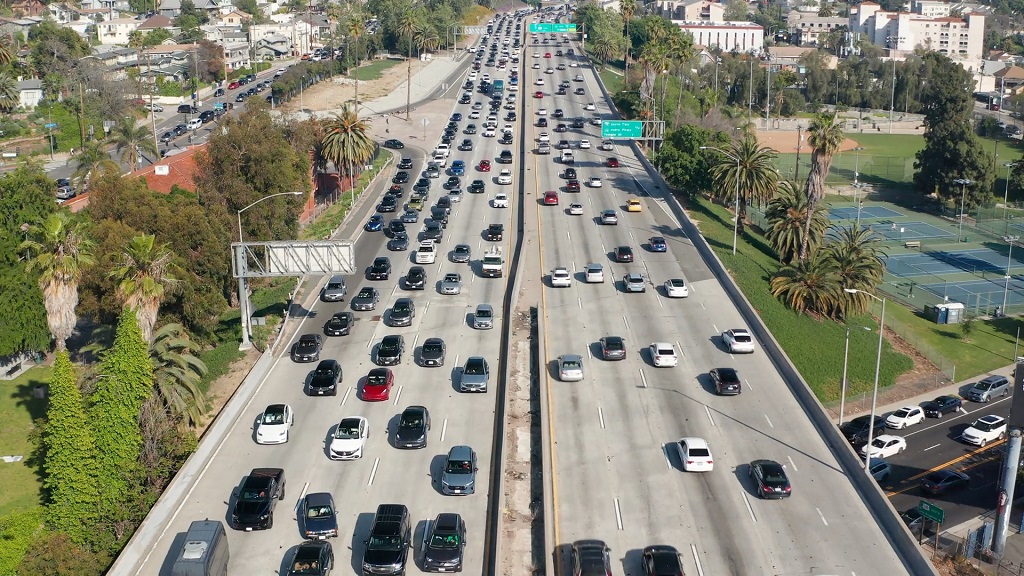
Car ownership reaches beyond the monthly loan. Insurance, fuel, maintenance, registration, parking, and repairs compete for the same paycheck.
MIT’s transportation estimate for one adult equals about $723 a month. A paid-off reliable car may cost less, while a financed vehicle with expensive insurance and paid parking can pass $1,000.
Transit can create a large budget win. The official LA Metro fare schedule sets a regular ride at $1.75, with a $5 daily cap and an $18 seven-day cap. Someone living near a practical bus or rail connection could spend under $1,000 a year on core Metro fares.
Commute time remains part of the price. Saving $700 a month loses appeal when a route adds ninety minutes to every workday. Apartment searches should therefore consider rent and transportation together.
Who Can Live Comfortably on $100,000?

Household size creates the clearest dividing line. MIT estimates basic annual income needs of $60,161 for one adult without children and $79,296 for two adults living on one income.
Children narrow the margin. One adult with one child needs an estimated $104,483 before taxes. Two adults with one working partner and one child need about $98,358, partly because the model assumes no paid childcare in that arrangement.
For two working adults with one child, required household income rises to $115,996 as childcare enters the budget. MIT places annual childcare expenses at $13,191 for a household with one child and two working adults.
Debt matters almost as much as family size. A renter paying $900 a month toward student loans and credit cards has a different life from a debt-free renter at the same salary. Employer health insurance, remote-work flexibility, free parking, and retirement matching can add thousands of dollars in annual value.
According to Census income data, Los Angeles city’s median household income was $81,939 for the 2020 to 2024 period. A $100,000 individual salary sits above the local household median, yet high housing costs can still make the paycheck feel ordinary.
How to Make $100,000 Go Further in Los Angeles

Set a housing ceiling before browsing listings. Keeping total housing near $2,200 a month preserves flexibility. Every additional $300 in rent consumes $3,600 a year.
Live near work whenever possible. A slightly higher rent can make financial sense when it removes paid parking, reduces fuel use, and returns several hours each week. Compare total location cost rather than rent alone.
Use raises to improve savings before upgrading fixed expenses. Increasing a 401(k) contribution by one or two percentage points creates long-term value without locking the household into another monthly bill.
A roommate remains the fastest route to financial slack. Sharing for another year or two may accelerate a down payment, eliminate debt, or create a cash reserve for a career change.
Can You Afford Los Angeles on $100,000?
Yes, especially as a single adult without children. A $100,000 salary can cover an average apartment, normal daily spending, moderate transportation costs, and consistent saving. Comfort is strongest with rent around $2,000, manageable debt, and deliberate car choices.
The salary becomes tight for a solo parent, a household facing major childcare costs, or anyone combining premium rent with large debt and vehicle payments. Los Angeles rewards income, yet location strategy often determines how wealthy daily life feels.