A small coffee shop can bring in $28,000 a month and still leave its owner with very little money. Rent, employee wages, coffee beans, milk, electricity, and payment processing fees can consume almost all that revenue before the owner takes a paycheck.
For a small independent coffee shop in the United States, a monthly budget of $15,000 to $30,000 is a useful starting scenario to investigate, although actual expenses can fall outside that range. A shop operated mainly by its owner will have a different cost structure than one employing several baristas and a full-time manager.
To see where the money goes, we will use a hypothetical neighborhood coffee shop generating $28,000 in monthly sales. The example includes paid employees, rented premises, and a modest menu of coffee, tea, and pastries.
Monthly Operating Costs for a Small Coffee Shop
Here is how much our example coffee shop spends in an ordinary month.
| Expense | Monthly Cost |
| Rent and building charges | $3,300 |
| Employee wages and payroll costs | $11,000 |
| Coffee, milk, food, and packaging | $8,400 |
| Electricity, water, and gas | $800 |
| Card processing fees | $700 |
| Business insurance | $250 |
| POS software and subscriptions | $200 |
| Cleaning supplies and maintenance | $350 |
| Marketing | $250 |
| Equipment repair reserve | $250 |
| Loan repayments | $500 |
| Miscellaneous expenses | $100 |
| Total Monthly Cash Outflow | $26,100 |
All figures are illustrative assumptions, not an industry survey or a quotation for a particular location. The example assumes $28,000 in sales before sales tax and tips, with ingredients and packaging costing 30% of sales and card processing costing 2.5%. Loan repayments include principal, and the repair reserve represents money set aside, so the table describes cash outflow rather than accounting profit.
At $28,000 in sales, the shop has $1,900 left after its planned monthly cash outflows. The owner is not included on payroll, so that amount must also cover any owner compensation, income taxes, and additional savings.
Cash timing deserves attention as well. A coffee shop may owe its coffee supplier on Monday, pay employees on Tuesday, and receive less revenue than expected during a rainy week. SoFi explains how a working capital loan can help businesses cover short-term expenses such as inventory and payroll. Before borrowing, the owner needs to calculate the added repayments and identify the future sales that will cover them. A loan will not correct persistent losses caused by insufficient customer traffic.
Rent Can Determine Whether a Coffee Shop Is Profitable
A location that costs $2,000 per month instead of $4,000 saves $24,000 annually. The more expensive property needs to generate enough additional sales to justify that difference.
Before choosing a property, consider other ways to cut operating costs without compromising service quality.
Commercial rent also involves charges that are easy to miss when browsing property listings. Depending on the lease, a tenant may have to contribute toward property taxes, building insurance, common area maintenance, and waste collection.
Before signing a lease, request a complete breakdown of the monthly occupancy cost, including any scheduled rent increases. Ask who pays for repairs to heating, ventilation, plumbing, and electrical systems.
Location should influence your sales forecast. A shop beside a busy office building may attract a large morning crowd but struggle during weekends. A residential location could have more consistent Saturday traffic but fewer weekday commuters.
Counting pedestrians at different times of day provides more useful information than relying on the number of people passing the property during one busy hour.
Employee Wages Are One of the Largest Monthly Expenses
Staffing a coffee shop involves more paid hours than its opening schedule initially suggests.
Suppose your shop opens at 7 AM and closes at 5 PM. Employees still need time to prepare equipment, stock ingredients, count the register, clean surfaces, and close the premises.
Busy periods may require two or three employees behind the counter. A quiet afternoon may need only one, provided the workload and safety arrangements allow it.
The U.S. Bureau of Labor Statistics reported a median hourly wage of $15.24 for food and beverage serving workers in May 2025. The figure covers a wider occupational group than coffee shop baristas alone, and local wages can differ considerably.
For budgeting purposes, remember that the hourly wage is not the entire employment cost. Employers may also pay payroll taxes, workers’ compensation premiums, and benefits. Scheduling additional staff during the busiest two hours may be less expensive than maintaining the same number of employees throughout the day.
Review hourly sales alongside staffing schedules. If a Tuesday afternoon consistently produces $90 in revenue but requires $70 in employee wages before payroll taxes, that period deserves a closer examination.
How Much Do Coffee Beans, Milk, and Food Cost?
Coffee beans are only one part of the cost of preparing a drink. Milk, syrups, chocolate powder, takeaway cups, lids, sugar, and napkins all contribute to the final expense.
Consider an illustrative $5 latte with the following direct costs.
| Ingredient or Supply | Estimated Cost |
| Espresso beans | $0.45 |
| Milk | $0.40 |
| Cup and lid | $0.25 |
| Sugar, napkin, and other supplies | $0.10 |
| Total Direct Cost | $1.20 |
At a selling price of $5, the drink has $3.80 remaining after its direct ingredients and packaging. That amount still needs to contribute toward payroll, rent, utilities, payment processing, and the other expenses of operating the shop.
A change of just $0.15 in ingredient costs becomes significant at high sales volumes. Selling 3,000 drinks with that additional expense increases monthly costs by $450.
Track how much milk and coffee you purchase compared with how much you sell. Wasted milk, incorrect drink preparation, spoiled pastries, and oversized portions increase costs without increasing revenue.
Pastries also deserve attention. Buying 30 croissants every morning makes little financial sense if 10 routinely remain unsold. Use sales records to adjust orders by weekday rather than purchasing identical quantities every day.
Utilities, Software, and Payment Fees Add Up
Espresso machines, refrigerators, ice makers, dishwashers, grinders, and air conditioning equipment consume electricity throughout the day.
Utility bills depend on local rates, shop size, equipment efficiency, and operating hours. A shop with extensive food preparation and multiple refrigerators will have different requirements than a small counter serving mostly drinks.
Payment processing fees also deserve a separate budget line. For example, a blended processing cost of 2.5% on $28,000 in monthly card sales would equal $700. Actual charges depend on the provider, payment method, and transaction mix.
Point-of-sale systems can introduce additional subscription fees for inventory tracking, staff management, loyalty programs, and online ordering.
Review which subscriptions employees actually use. Paying for an advanced inventory package offers little financial benefit if purchases and waste are still being recorded manually.
Expenses That Owners Forget to Include
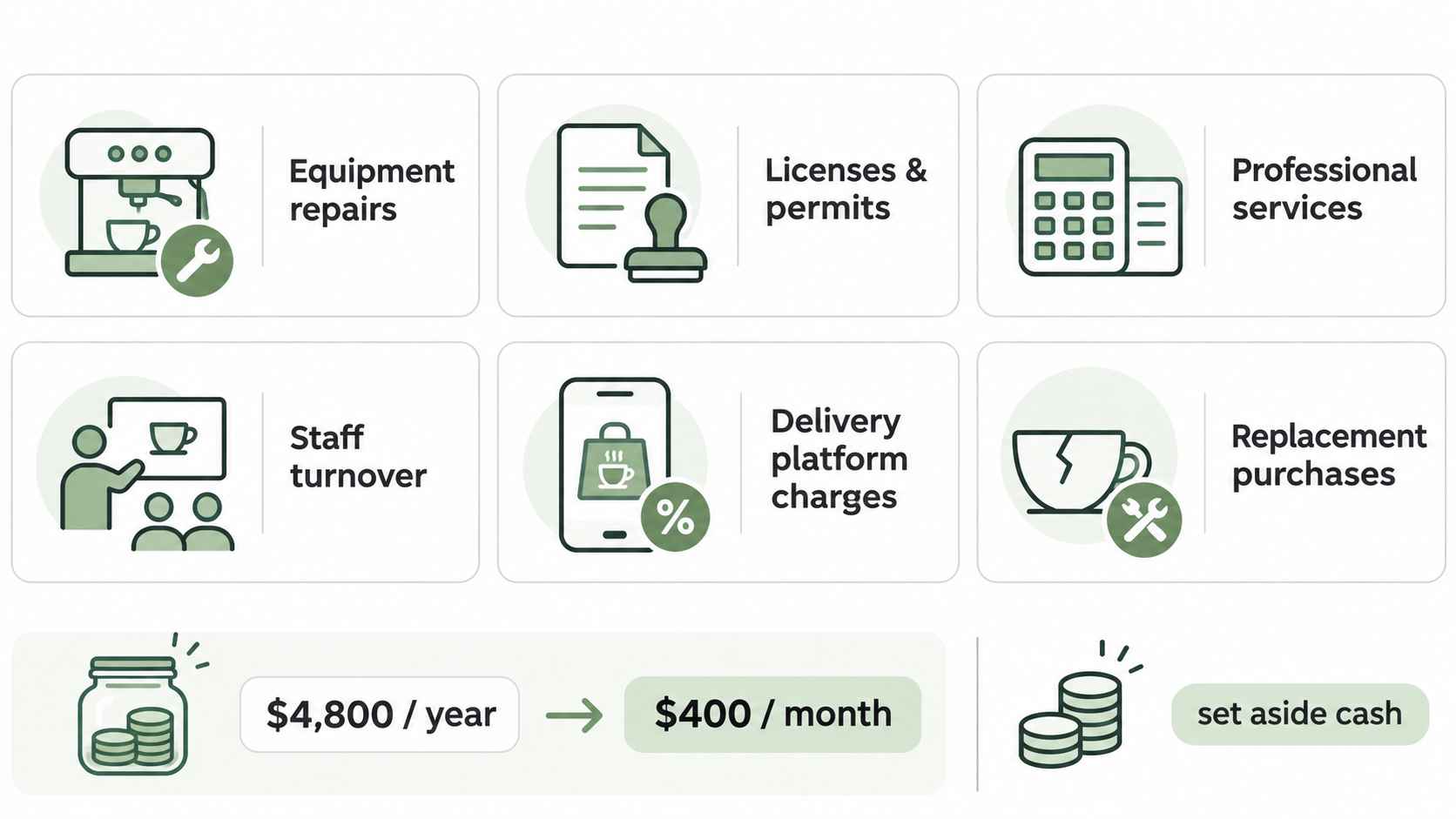
Some coffee shop costs arrive only a few times per year, making them easy to miss in a monthly budget.
A reliable expense tracking system can help owners identify irregular payments before they disrupt cash flow.
- Equipment repairs. Espresso machines, grinders, refrigerators, and water filtration systems need servicing. A breakdown may also interrupt sales.
- License and permit renewals. Food business requirements differ by state and municipality. Some fees recur annually.
- Professional services. Bookkeeping, accounting, payroll administration, and legal assistance may require separate payments.
- Staff turnover. Hiring and training new employees consume paid working hours before they are fully productive.
- Delivery platform charges. Third-party delivery orders may carry commissions and packaging expenses that reduce the amount retained per sale.
- Replacement purchases. Broken cups, worn cleaning equipment, furniture repairs, and small kitchen tools need funding throughout the year.
Regular reviews can also reveal hidden business costs that reduce profits without being immediately noticeable.
Annual expenses should be divided into monthly provisions. If insurance renewal, accounting fees, and scheduled equipment servicing are expected to cost $4,800 annually, reserving $400 each month prevents those bills from arriving without available funds.
A replacement reserve is separate from the accounting treatment of purchasing equipment. The purpose is to keep enough cash available when something needs replacing.
How Many Customers Does a Coffee Shop Need to Break Even?
Knowing the monthly expense total is useful, but sales targets tell you if the business can pay its bills.
In our example, fixed and planned monthly cash commitments total $17,000. Ingredients and packaging consume 30% of sales, and payment processing consumes another 2.5%.
That leaves 67.5% of revenue to cover the $17,000 in other cash commitments.
Using the contribution margin approach explained by the U.S. Small Business Administration, the calculation is straightforward.
$17,000 ÷ 0.675 = $25,185 in monthly sales.
If the average customer spends $7.50 and the shop operates 28 days per month, it needs about 120 transactions per day to meet that cash requirement.
| Average Daily Transactions | Monthly Sales at $7.50 Per Transaction |
| 80 | $16,800 |
| 100 | $21,000 |
| 120 | $25,200 |
| 140 | $29,400 |
| 160 | $33,600 |
At 100 transactions per day, the shop falls short of its planned monthly cash requirements. At 140, it generates enough to cover them and leaves some money for the owner and additional reserves.
The calculation assumes ingredient and processing costs remain proportional to sales and staffing requirements do not change. Extra employees, overtime, promotional discounts, or a different product mix can shift the target.
The result is a cash planning threshold, not an accounting profit forecast, because it includes loan principal payments and money reserved for repairs.
How Much Cash Should You Keep in Reserve?
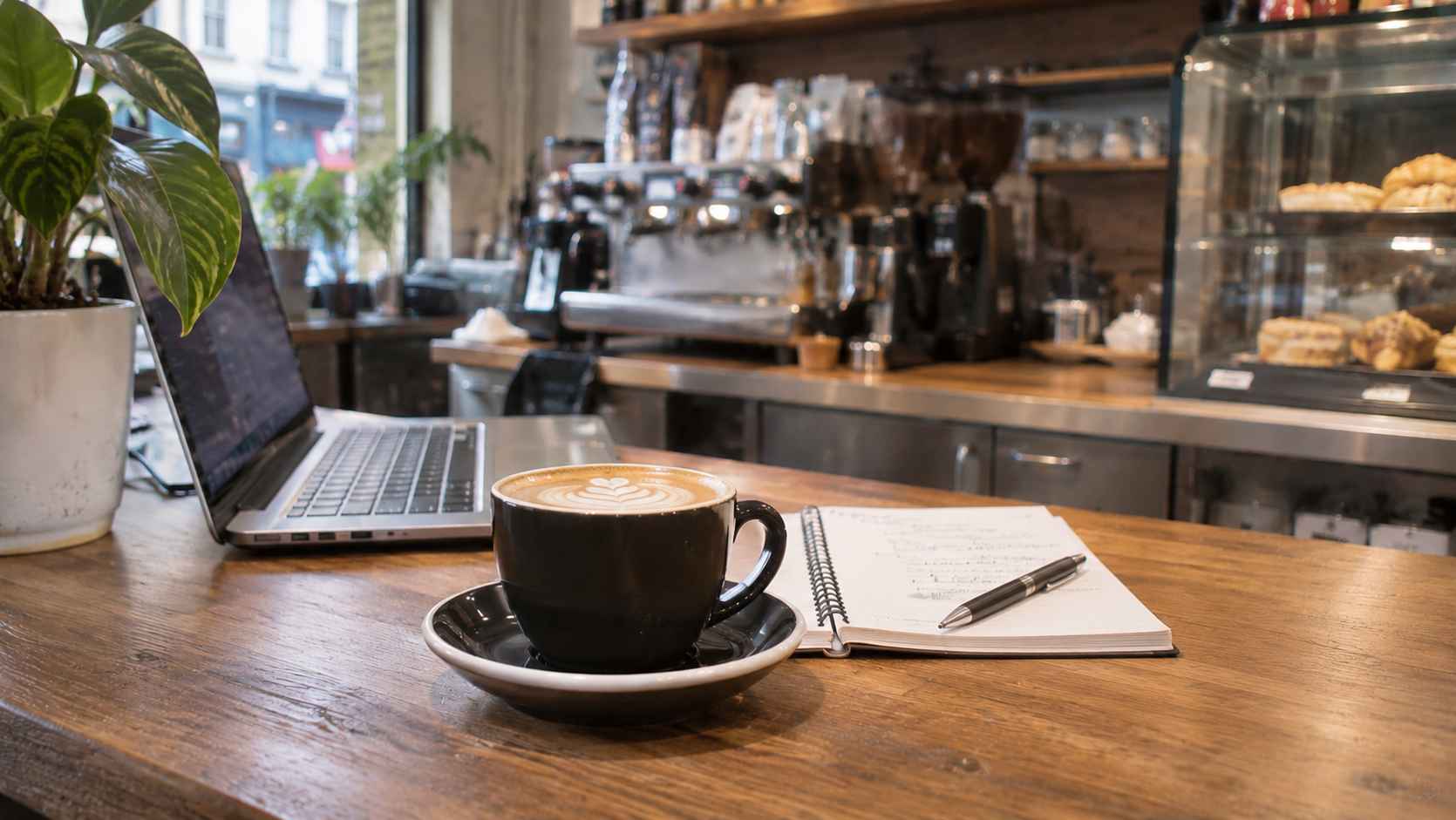
Monthly expenses do not arrive evenly. Rent may be due on the first day, employees get paid on scheduled payroll dates, and suppliers expect payment according to their own terms.
A cash reserve protects the business when sales fall or an unexpected expense arrives.
For a shop with $26,100 in planned monthly outflows, three months of equivalent spending would equal $78,300. That is an illustrative reserve target, not an amount every new owner can immediately afford. The appropriate reserve depends on unavoidable commitments, payment terms, available credit, and how quickly the shop can reduce spending.
Calculate the minimum cash required to keep the business operating during a slow period. Include rent, essential staffing, utilities, insurance, supplier payments, and loan obligations. Avoid using tax collections or money owed to employees as an emergency fund.
Review your actual monthly figures after the shop opens. Your own sales records, payroll reports, supplier invoices, and bank statements will gradually replace the assumptions in your original budget.
Before expanding the menu, purchasing another machine, or extending business hours, calculate the additional monthly expense and the sales required to pay for it. A coffee shop needs enough cash left after its bills to compensate the owner and keep operating through slower periods.