
Europe’s regulatory environment is undergoing a major digital transformation. EU institutions and national governments are introducing stricter tax compliance systems to reduce the VAT gap, limit tax evasion, and simplify cross-border transactions.
Multinational companies operating across the European Union now face faster reporting cycles, structured invoice requirements, and country-specific technical standards.
Compliance can no longer function as a periodic finance task. It must become part of daily billing, procurement, accounting, and data management processes.
Successful preparation requires a proactive approach, detailed knowledge of local obligations, and reliable technology infrastructure.
Companies that delay system upgrades may face reporting errors, rejected invoices, financial penalties, interrupted payments, and difficulties entering new European markets.
The Tide of Digital Tax Compliance in Europe

Tax reporting traditionally followed a reactive model. Businesses gathered transaction records at the end of each month or quarter and submitted summaries to tax authorities.
European tax systems are now moving toward continuous transaction controls and near-real-time reporting.
VAT in the Digital Age, commonly known as ViDA, represents one of the most important EU efforts supporting that shift.
Electronic invoicing sits at the center of digital tax reform. Structured invoice data gives tax authorities faster access to commercial transaction information and makes inconsistencies easier to identify.
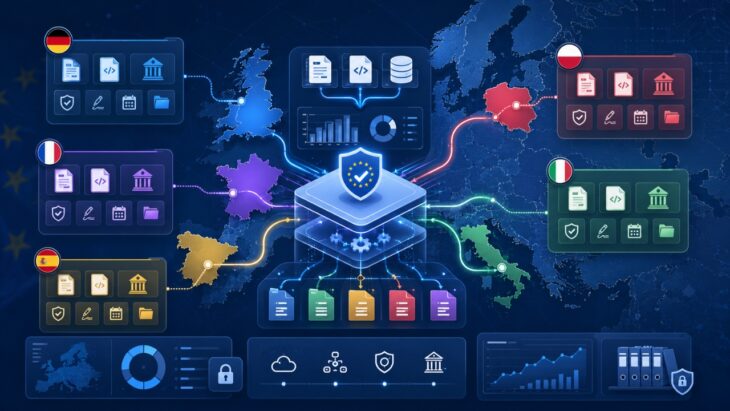
Compliance therefore needs to be built directly into billing and procurement workflows. Manual checks completed after invoices have already been issued may no longer provide enough protection. Organizations preparing for changes in European taxation need a clear view of how ViDA is designed to operate. Its framework is based on three main pillars that modernize reporting, platform taxation, and VAT registration. Digital Reporting Requirements introduce transaction-level reporting for certain cross-border activities. Structured data will need to move quickly between business systems and tax authorities. Finance teams will need accurate records at the moment a transaction takes place. Errors in customer VAT numbers, tax codes, invoice dates, or product classifications may lead to immediate reporting problems. Online platforms operating in short-term accommodation and passenger transport may become responsible for collecting and paying VAT on transactions completed by individual providers. Such rules place greater responsibility on digital marketplaces. Platforms must identify taxable transactions, calculate VAT correctly, retain reliable records, and submit required information to authorities. Single VAT Registration expands the existing One Stop Shop framework. Multinational companies may be able to manage more EU VAT obligations through registration in one member state instead of registering separately in every country where they conduct eligible activities. Corporate billing systems must do more than create static digital documents. Modern systems need to transmit structured, secure, and validated transaction data to government platforms. Long-term planning is essential. Short-term software fixes may meet one local deadline but fail when EU-wide reporting rules become active. EU harmonization is the long-term objective, but significant fragmentation still exists. Member states continue to introduce national digital tax systems before all ViDA measures take effect. Italy, France, Poland, Germany, Spain, and other countries follow different implementation schedules, technical models, clearance procedures, and invoice formats. Factur-X, XRechnung, XML schemas, government portals, and continuous transaction control systems all create separate technical obligations. Software configured for Spanish reporting rules may not satisfy technical requirements in Germany, France, or Poland. Finance and IT departments must therefore manage several regulatory models at the same time. Scalable infrastructure can reduce that burden. A flexible compliance layer can convert standard billing information into country-specific formats without forcing every local office to manage a separate system. New B2B requirements change how domestic companies issue, receive, process, and archive invoices. As a result, preparing for e-invoicing Germany requirements has become a priority for finance, procurement, and IT departments working with German customers and suppliers. Beginning in 2025, German businesses must be able to receive compliant electronic invoices. Mandatory invoice issuance will follow in phases, with transition periods linked to business size and annual turnover. German requirements focus on structured invoice data that complies with the European EN 16931 standard. Common formats include XRechnung and ZUGFeRD configurations that meet required technical specifications. Germany’s economic influence may encourage neighboring countries to accelerate their own digital tax programs. Companies selling goods or services in Germany should update billing and ERP systems early enough to test invoice creation, reception, validation, and storage. Manual invoice adjustments are not practical for companies operating across several European jurisdictions. Country-specific edits slow billing cycles, increase error rates, and place heavy pressure on finance teams. Automation allows companies to centralize compliance logic and apply local rules at the transaction level. An adaptable technology layer can transform standard billing information into the exact XML structure required by each tax portal. Centralized management also reduces dependence on manual updates across local subsidiaries. Regulatory changes can be configured within one compliance environment and applied to all affected transactions. Automation supports more than regulatory reporting. Faster invoice validation can improve payment processing, reduce disputes, and give finance teams clearer visibility into transaction status. Compliance is often the main reason companies invest in digital tax technology, but automated invoicing can also improve financial performance. Electronic invoice delivery removes delays linked to manual entry, paper handling, email attachments, and physical mailing. Structured invoices can enter accounts payable and accounts receivable systems within seconds. Days Sales Outstanding may decrease when invoices reach customers quickly and pass validation without manual correction. Accounts payable teams may also process approved invoices sooner, making it easier to manage payment schedules and supplier relationships. Standardized financial data creates additional analytical value. Corporate reporting tools can monitor spending patterns, cash flow movements, tax exposure, invoice rejection rates, and contract compliance on an ongoing basis. Procurement leaders can use cleaner data to assess vendor behavior, identify pricing inconsistencies, track payment terms, and locate opportunities for negotiated discounts. Digital tax regulation can therefore act as a foundation for broader finance modernization. Technology investments may produce measurable returns through lower operating costs, improved data quality, faster payments, and stronger controls. We’ve set out the next steps for VAT in the Digital Age (#VIDA), outlining the implementation activities for 2026. ViDA is a key reform to make the EU #VAT system more digital, efficient, and harmonised, while helping businesses to grow. #EUTaxation pic.twitter.com/zPiFEEplp8 — EU Tax & Customs 🇪🇺 (@EU_Taxud) May 22, 2026 Digital tax reform is reshaping how companies manage invoicing, VAT reporting, and cross-border transactions across Europe. ViDA and national e-invoicing mandates are pushing businesses toward structured data, faster reporting, and greater automation. Companies that update their systems early can reduce compliance risks, prevent invoice delays, and improve financial visibility. A centralized platform also makes it easier to manage different national requirements without relying on separate tools in every market. SNI Technology can support that transition by helping enterprises automate reporting, connect ERP systems with tax portals, and prepare for future regulatory changes across Europe.
Decoding the Pillars of the ViDA Initiative
Digital Reporting Requirements
Platform Economy VAT Rules
Single VAT Registration
Local vs. EU-Wide Rules
The B2B Invoicing Transition in Germany
Germany provides a clear example of Europe’s accelerating digital tax shift.
Future-Proofing Corporate Operations Through Automation

Business Value and Corporate Insights
Closing Thoughts